Arizona FSBO disclosure requirements: what you must tell the buyer
Arizona does not give FSBO sellers a simple “check this one state form and you’re done” rule. But your disclosure duty is still very real. In Arizona, sellers have to disclose known material facts that affect value and are not readily observable, and the standard AAR resale contract adds hard deadlines for the SPDS, insurance-claims history, lead paperwork, and in some deals an Affidavit of Disclosure.
That is where Arizona sellers get burned. They assume “as is” means “say less,” or they hand over the SPDS late and accidentally give the buyer extra time to kill the deal.
New to FSBO? Start with the main FSBO guide. This post assumes you are already pulling together your Arizona paperwork.
Arizona’s rule is broader than one form
The core Arizona disclosure rule comes from the Arizona Court of Appeals, not from a single statewide resale disclosure statute. In Hill v. Jones, the court said a seller has to disclose known facts that materially affect the value of the property when those facts are not readily observable and are not known to the buyer. That is still the basic Arizona disclosure rule.
In practice, most Arizona residential sales handle that duty with the AAR Residential Seller’s Property Disclosure Statement, usually called the SPDS. The form itself is a risk-management tool, not a magical immunity shield. But it is the standard document buyers, title companies, and attorneys expect to see.
And the current AAR Residential Resale Purchase Contract makes the timing real. Under the February 2026 form, the seller delivers the completed SPDS within 3 days after contract acceptance. Miss that window and the buyer’s disapproval period stretches out.
If you are already under contract, keep your Arizona purchase agreement guide open next to this article. The contract deadlines and the disclosure deadlines work together.
What the Arizona SPDS actually covers
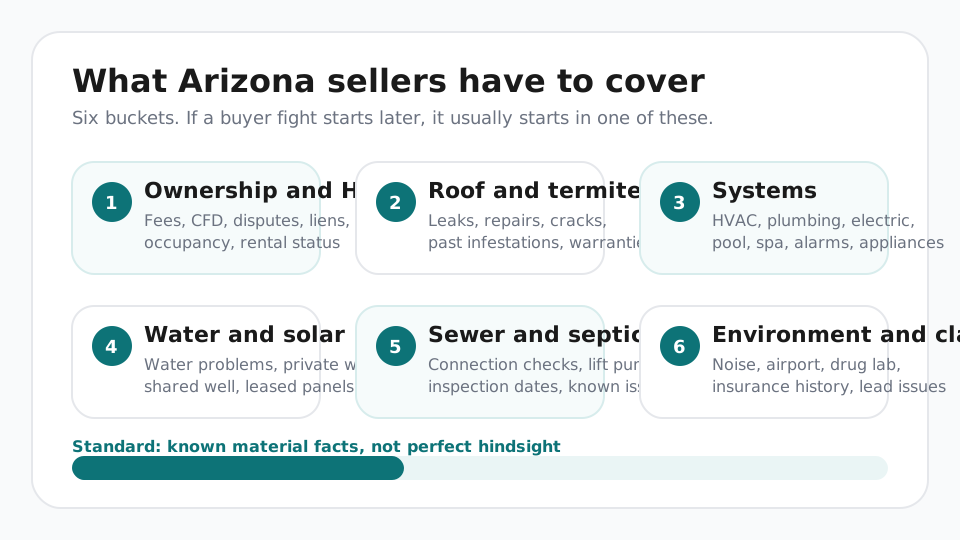
Arizona’s SPDS is not just “did the roof leak?” It goes wide.
| Area | What Arizona asks about | Why it matters |
|---|---|---|
| Ownership and legal | HOA, planned community or condo issues, CFDs, fees, disputes, liens, rental status | Buyers do not want surprise fees or restrictions |
| Roof, structure, termites | Roof leaks, repairs, cracks, settling, past damage, termite history, treatment warranties | Arizona termite and soil claims get ugly fast |
| Systems | HVAC, electrical, plumbing, pool or spa equipment, alarms, security, appliances | ”It mostly works” is still disclosure material |
| Water and wastewater | Drinking-water issues, well or shared well, sewer connection, septic or onsite wastewater, lift pumps | Rural and exurban Arizona deals live or die here |
| Environmental and location | Noise, odors, landfill, toxic waste, airport proximity, clandestine drug lab history | Arizona asks about off-property nuisances more than many states |
| Claims and insurance | Past homeowner’s insurance claims, flood or fire damage, insurability issues | Buyers and insurers both care |
Arizona cares about termites, water, and systems more than sellers expect
The public sample SPDS asks about roof leaks, roof repairs, cracks or settling, and damage from flood, fire, wind, expansive soils, water, or hail. Then it goes straight into wood-destroying organisms, including past termite presence, treatment, and warranty transfer.
That is not filler. Termites are a standard Arizona fight. So are slab movement, drainage problems, roof leaks after monsoon storms, and AC systems that limp through showings in April and quit in June.
The SPDS also asks whether the property currently receives services like electricity, cable, and water, whether the property has had past or present drinking-water problems, whether there are alternate power systems like solar or generators, and whether any of those systems are leased. If the panels are leased, say it. If the inverter throws codes, say it. If the well water had a contamination issue you fixed two years ago, say that too.
Well and septic properties need extra paperwork
Arizona REALTORS also publishes a Domestic Water Well/Water Use Addendum for properties served by a well. The SPDS sample specifically tells sellers to complete and attach that addendum when the water source is a private or shared well.
If the property uses onsite wastewater instead of city sewer, the SPDS asks about sewer connection, septic or other facility type, inspection or pumping dates, known problems, and whether any facility was abandoned, capped, or removed. Then it gives you an extra warning: the Arizona Department of Environmental Quality requires a pre-transfer inspection of onsite wastewater treatment facilities on resale properties. ADEQ says the seller must retain a qualified inspector within six months before the transfer date.
If your property is on a well or septic, also read the well-water FSBO guide. Arizona rural buyers will ask much better questions than you think.
The deadlines that matter in Arizona
Arizona is not hard because the concepts are hard. It is hard because the deadlines stack.
The current February 2026 AAR resale contract gives you these main disclosure clocks:
- SPDS: deliver within 3 days after contract acceptance.
- Insurance claims history: deliver a written 5-year claims history within 5 days after contract acceptance, or a shorter history if you have owned the property for less than five years.
- Lead-based paint information: if the home was built before 1978 and you did not provide the lead packet before acceptance, provide it within 5 days after contract acceptance.
- Affidavit of Disclosure: if the property is in an unincorporated county area and the transfer falls under A.R.S. 33-422, deliver the completed affidavit within 5 days after contract acceptance under the contract, while the statute separately requires it at least 7 days before transfer.
- HOA or condo resale packet: under A.R.S. 33-1806 for planned communities and A.R.S. 33-1260 for condominiums, the seller or association generally has 10 days after written notice of a pending sale to deliver the required resale documents.
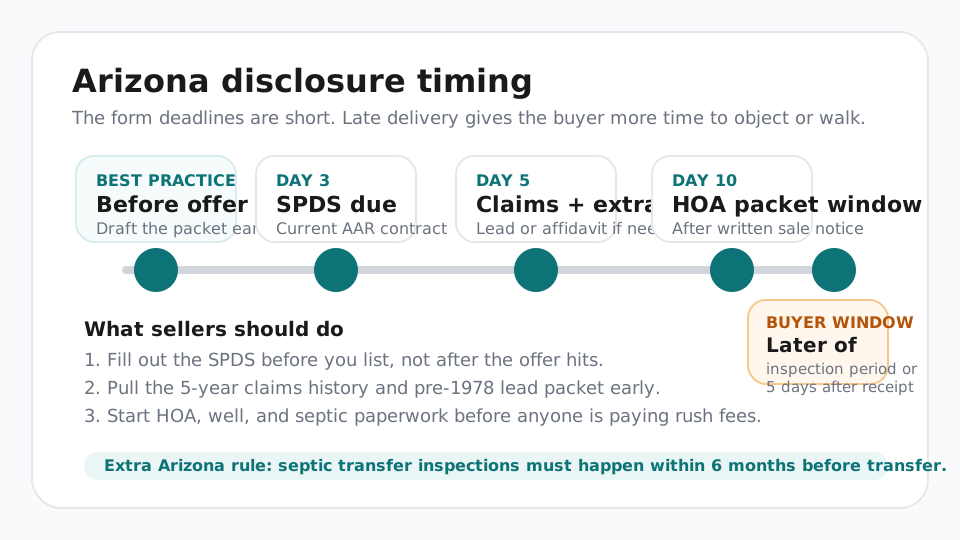
The buyer’s side matters too. Under the same AAR contract, the buyer can give notice of SPDS or claims-history items disapproved within the inspection period or within 5 days after receipt, whichever is later. For pre-1978 homes, federal law also gives the buyer a 10-day period to conduct a lead-based paint risk assessment or inspection unless both sides agree otherwise in writing. EPA is clear that sellers do not have to pay for or conduct that inspection themselves, but they do have to give the buyer the chance to do it.
That is why late delivery is so expensive. Every late disclosure can reopen a buyer exit ramp you thought had already closed.
HOA, condo, and transfer-fee issues sellers miss
Arizona HOA and condo disclosures are their own lane. If your home is in a planned community or condominium, the resale packet is not optional busywork. The statute requires governing documents, assessment information, reserve and budget documents, insurance information, and pending-litigation disclosures.
The fee surprise is real too. Both A.R.S. 33-1806 and A.R.S. 33-1260 let the association charge up to an aggregate of $400 for resale disclosure, lien estoppel, and related transfer services, plus up to $100 for rush service and $50 for an update if enough time passes. Sellers who forget this end up annoyed at closing over a fee that was sitting in the statute the whole time.
If the property is in an HOA, start the request process early. Waiting until the last week is how you get hit with rush fees and avoidable delay.
”As is” does not let you hide things
Arizona’s current AAR contract says the property is sold in its present physical condition. Fine. That helps establish that the buyer is buying the house as it sits.
But the same contract also says the seller warrants that they disclosed all material latent defects and any information known to the seller that materially and adversely affects the price the buyer is paying. That includes sewer or onsite wastewater information to the best of the seller’s knowledge.
So no, “as is” does not mean “say less.” It means “I am not promising to fix it.” If the AC is failing, the roof leaked, the septic backed up, or the termite warranty lapsed after a prior infestation, disclose it and let the buyer price the deal around that reality.
What Arizona says you usually do not have to disclose
Arizona is also unusually specific about a few things sellers are generally protected from having to disclose. Under A.R.S. 32-2156, a seller generally is not liable for failing to disclose that a property was the site of a natural death, suicide, homicide, or other felony; was owned or occupied by a person with HIV/AIDS or another disease not transmitted through common occupancy; or is located near a sex offender. The statute also says failure to disclose those items is not grounds for rescission.
That does not mean Arizona is a no-disclosure state. It just means the legislature carved out a few specific stigmatized-property issues. Known drug-lab history is different. The SPDS asks about that directly.
Arizona details sellers routinely miss
Claims history is not the same thing as the SPDS
The AAR contract treats the 5-year insurance claims history as its own disclosure item. Pull it early. If the buyer learns about a prior water-loss claim from their insurer before hearing it from you, your credibility drops.
Septic inspections are on the seller
This is a big Arizona-specific rule. If the property has onsite wastewater treatment, ADEQ says the seller retains a qualified inspector to perform the transfer inspection within six months before transfer. Do not assume the buyer will handle it later.
If something changes during escrow, update it
The current AAR contract requires the seller to immediately notify the buyer of changes in the property or prior disclosures. That notice counts as an SPDS update, and the buyer gets 5 days after delivery to disapprove the new item unless you were already obligated to fix it.
If the roof starts leaking after contract acceptance, do not play dumb. Update it in writing.
Unincorporated land deals have an extra affidavit
If the home sits in an unincorporated area and the sale falls under A.R.S. 33-422, the affidavit of disclosure is not optional. The statute says the buyer can rescind for 5 days after it is furnished. That is another reason to handle it early.
Your Arizona disclosure checklist
Before you accept an Arizona offer, get these done:
- Download the current AAR SPDS sample and fill it out from actual knowledge, not optimism.
- Pull a 5-year homeowner’s insurance claims history.
- If the home was built before 1978, prepare the federal lead disclosure package.
- If the property has a private or shared well, attach the Arizona well addendum and gather the well records.
- If the property has septic or other onsite wastewater treatment, schedule the ADEQ-required transfer inspection.
- If the home is in an HOA or condo association, request the resale packet before you are under deadline pressure.
- If the property is in an unincorporated area and the deal falls under A.R.S. 33-422, prepare the affidavit of disclosure early.
- Have your Arizona real estate attorney review the whole packet before it goes out.
Your next move: fill out the SPDS before the first serious offer lands, order the claims history today, and if the property is on well or septic, get those records and inspections moving now. Then hand the full packet to your attorney and let the deal start from a position of strength.
Keep reading

Best flat fee MLS services in California (2026)
A side-by-side comparison of California flat fee MLS companies, with real pricing, local MLS coverage questions, and the closing-fee math sellers miss.
Free FSBO purchase agreement template for Ohio
Ohio FSBO sellers don't need a Realtor's form to write a valid purchase contract -- here's which forms to use, what each section covers, and the regional quirks that trip sellers up.

Skip the agent, hire an attorney
A real estate attorney costs $500-$3,000, handles the entire legal side of your sale, and has 7+ years of legal education. Your agent has a few months of coursework and charges $24,000. The choice isn't hard.