How to sell an inherited house FSBO: probate and tax guide
What to do before listing an inherited house yourself, from probate authority and stepped-up basis to sibling buyouts and closing paperwork.
A real estate attorney gives you better protection than an agent ever could, with more education, a fiduciary duty to you, and a bill that's a fraction of the cost. Here's how it works.
What to do before listing an inherited house yourself, from probate authority and stepped-up basis to sibling buyouts and closing paperwork.
Arizona sellers must disclose known material facts, deliver the SPDS fast, and handle HOA, well, septic, and lead paperwork correctly.
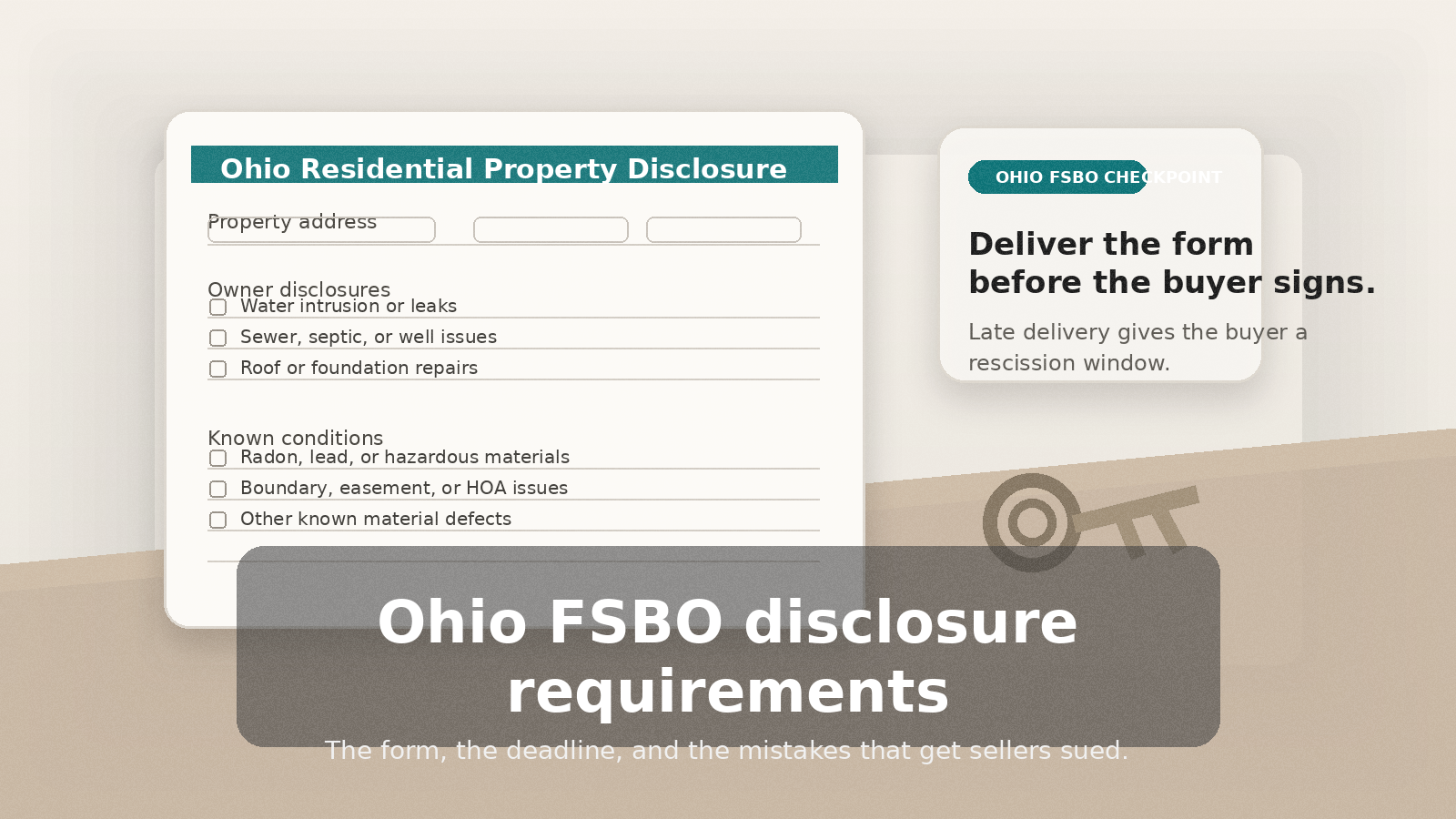
Ohio Revised Code 5302.30 requires most 1-4 unit sellers to deliver a Residential Property Disclosure Form. Here's what it covers, who is exempt, and when a buyer can cancel.
California FSBO sellers usually need a TDS, NHD, tax notices, HOA documents, lead-paint paperwork, and newer 2025-2026 disclosures.
Pennsylvania FSBO sellers can use a free purchase agreement template, but it needs the right zoning, disclosure, and transfer-tax terms before anyone signs.
Michigan FSBO sellers can use a free purchase agreement template, but the contract only works if you attach the right disclosures and get an attorney to review it.
Florida FSBO sellers must disclose known material defects plus flood, HOA, property-tax, sewer, radon, and lead-paint notices.
New York FSBO sellers need an attorney to draft their purchase contract -- here's what the standard bar association form covers, what the 2024 PCDS changes mean for you, and how to close without an agent.
North Carolina FSBO sellers can use the standard Form 2-T for free -- here's how to get it, how the due diligence fee works, and the NC-specific traps that cost sellers money.
Texas Property Code Section 5.008 requires most sellers to complete a Seller's Disclosure Notice. Here's exactly what the form covers, who's exempt, and the mistakes that lead to lawsuits.
Georgia FSBO sellers can't use the GAR form -- here's how to get a solid purchase agreement, what it must include, and the Georgia-specific traps that cost sellers money.
Arizona FSBO sellers can use the AAR Residential Resale Purchase Contract or a free alternative -- here's how the contract works, what the BINSR process means, and where sellers trip up.
California FSBO sellers have several contract options beyond the CAR RPA -- here's which form to use, what each section means, and the disclosure traps that sink deals.
Ohio FSBO sellers don't need a Realtor's form to write a valid purchase contract -- here's which forms to use, what each section covers, and the regional quirks that trip sellers up.
Florida FSBO sellers can use the FAR/BAR contract for free -- here's how to get it, what each section means, and where sellers lose money.
Texas FSBO sellers can use the TREC One to Four Family Residential Contract for free -- here's how to fill it out, what each section means, and where most sellers trip up.
A step-by-step guide to finding, vetting, and hiring a real estate attorney for your FSBO sale -- where to search, what to ask, and red flags to watch for.
A seller's disclosure tells buyers about known defects in your home. Here's what it covers, how requirements vary by state, and why your attorney makes it easy.
A real estate attorney costs $500-$3,000, handles the entire legal side of your sale, and has 7+ years of legal education. Your agent has a few months of coursework and charges $24,000. The choice isn't hard.