California FSBO disclosure requirements: what you must tell the buyer
California FSBO sellers do not have one neat disclosure form. For most 1-4 unit resales, you are dealing with a Transfer Disclosure Statement, a Natural Hazard Disclosure, tax and assessment notices, safety certifications, and a few California-only extras that got even longer in 2025 and 2026. If that packet shows up after the buyer signs, California Civil Code Section 1102.3 gives the buyer 3 days to cancel after in-person delivery or 5 days after delivery by mail or electronic record.
New to FSBO? Start with the main FSBO guide. This post assumes you are already getting your California paperwork together.
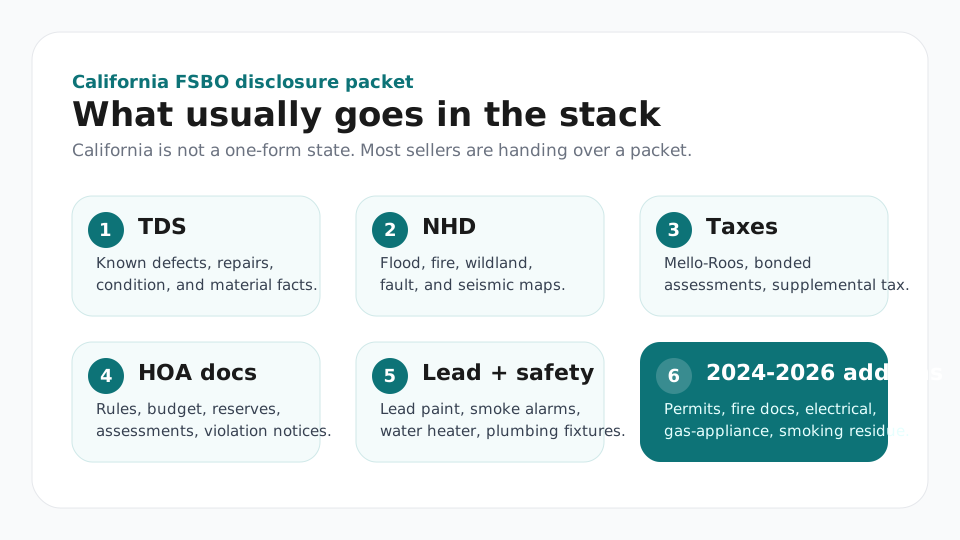
California disclosure is a packet, not one form
The best official overview is the California Department of Real Estate disclosure guide. The short version is that California wants the buyer to see the full picture before closing, not just a checkbox saying the house is “as is.”
| Disclosure | When it usually applies | What it covers |
|---|---|---|
| Transfer Disclosure Statement (TDS) | Most 1-4 unit resales | Property condition, known defects, repairs, and material facts |
| Natural Hazard Disclosure (NHD) | Most 1-4 unit resales | Flood, dam, fire, wildland, earthquake fault, and seismic hazard zones |
| Mello-Roos / bonded assessment notice | If the property is in a district or subject to a fixed lien assessment | Special taxes and assessment liability |
| Supplemental property tax notice | Most sales | Warning that reassessment can trigger one or two extra tax bills |
| HOA / common interest development documents | Condos, townhomes, and planned developments | Governing docs, assessments, budget, reserves, violations, and defect notices |
| Lead-based paint package | Homes built before 1978 | Known lead hazards, reports, EPA pamphlet, and buyer inspection opportunity |
| Safety and newer California add-ons | Depends on the property | Smoke detectors, water-heater bracing, plumbing fixtures, permit history, fire-zone docs, and newer 2025-2026 notices |
Start with the Transfer Disclosure Statement
For most California FSBO sales, the TDS is the anchor document. Civil Code Sections 1102 through 1102.13 make it the seller’s written statement about the condition of the property. The DRE guide is blunt about the goal: meaningful disclosures about the house before title transfers.
That does not mean California expects you to become your own inspector. It means you answer honestly about what you already know. The patched ceiling stain. The recurring drainage issue near the side yard. The garage conversion your contractor finished without final signoff. The neighbor’s industrial use that rattles the fence every morning. If you know it and it affects value or desirability, write it down.
And no, “as is” does not let you skip this. Civil Code Section 1102.1 says delivery of the transfer disclosure statement cannot be waived in an “as is” sale. “As is” just means you are not promising repairs. It does not mean you get to play dumb.
Some sales are exempt. Probate, foreclosure, government transfers, many co-owner transfers, and some family transfers are on the exemption list in Civil Code Section 1102.2. Even then, California law still does not protect outright misrepresentation. If the buyer asks a direct question, answer it honestly.
Deliver it early or hand the buyer an exit door
California says the disclosure packet should go out “as soon as practicable.” In real life, smart FSBO sellers treat that as “before the buyer is emotionally invested and before you are counting on the closing.”
If a required disclosure or a material amendment lands after the offer is signed, the buyer gets a fresh cancellation window: 3 days after in-person delivery or 5 days after delivery by mail or electronic record. That is not a minor technicality. It is a real off-ramp. You can be deep into escrow, think the deal is solid, send a late amendment about the old leak or missing permit, and suddenly the buyer has a clean chance to walk.
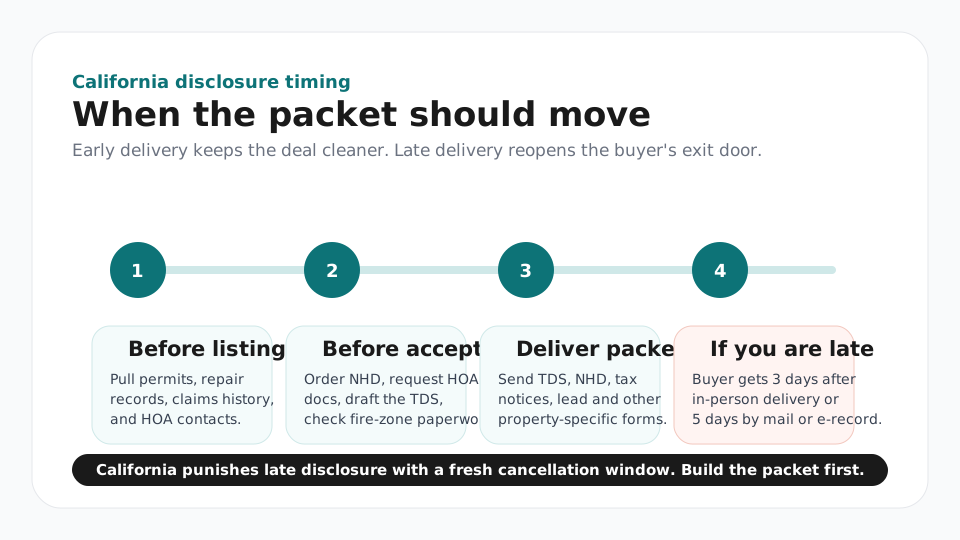
The practical move is simple. Build the packet before you list or, at the latest, before you accept a serious offer. California paperwork is easier to negotiate on the front end than to fix once everyone has inspections scheduled and movers booked.
The Natural Hazard Disclosure is its own world
California’s Natural Hazard Disclosure Statement asks whether the property sits in mapped hazard areas for:
- FEMA special flood hazard zones
- Dam-failure inundation areas
- Fire hazard severity and wildland fire areas
- Earthquake fault zones
- Seismic hazard zones, including liquefaction and landslide areas
This is why California disclosure packets feel thicker than everywhere else. You are not just talking about the house. You are talking about the map under the house.
Most sellers order a third-party NHD report. That is the normal move, and it is usually money well spent. The DRE guide notes that sellers and agents can rely in good faith on a qualified third-party provider, which helps limit liability if the report turns out to contain an error. But the legal responsibility to furnish the disclosure is still yours. The report company is a tool. It is not a magic shield.
There is another fire-related layer older checklists still miss. If the property is in a high or very high fire hazard severity zone, Civil Code Section 1102.19 requires defensible-space compliance documentation when that documentation exists for your jurisdiction. If you do not have it, buyer and seller can sign a written agreement making the buyer obtain the documentation after closing. Either way, do not ignore this just because the house “has never had a problem.” California is asking about mapped risk, not your gut feeling.
The California extras sellers miss
Taxes and assessments
If the property is in a Mello-Roos district or subject to certain bonded assessments, you need to provide that notice. California also requires a supplemental property tax disclosure because a change in ownership can trigger one or two extra tax bills that do not get paid out of the buyer’s impound account automatically. This is one of those issues that creates ugly phone calls after closing because buyers assume the lender will handle it. Often, it will not.
HOA and condo documents
If you are selling in a common interest development, Civil Code Section 4525 requires a real package: governing documents, recent financials, the operating budget, reserve information, current regular and special assessments, unpaid amounts tied to the unit, unresolved violation notices, and some defect-related notices or settlement information when they exist. If your HOA moves slowly, order this early. Associations are famous for turning a simple sale into a two-week delay.
Deaths, lead paint, and safety certifications
California has a rule people remember because it sounds strange but gets asked all the time: under Civil Code Section 1710.2, you generally do not have to disclose a death on the property if it happened more than three years before the buyer’s offer. Inside that three-year window, disclose it. And if the buyer asks you directly, do not dance around the answer.
If the home was built before 1978, the federal lead-based paint disclosure rule still applies. That means disclosing known lead hazards, handing over any reports, giving the EPA pamphlet, and offering the buyer a 10-day opportunity to inspect unless both sides agree to a different period.
California also layers in safety paperwork that sellers forget until escrow asks for it at the last second: a smoke-detector compliance statement, water-heater bracing certification, and written disclosure about whether the house has noncompliant water-conserving plumbing fixtures. If the home is an older light-frame house, the earthquake guide and related structural deficiency disclosures may also come into play.
The 2024-2026 add-ons older blogs miss
This is where stale internet advice gets dangerous.
For offers accepted on or after July 1, 2024, Civil Code Section 1102.6h added a contractor-and-permit disclosure. If you made room additions, structural changes, other alterations, or repairs after taking title, and a contractor did the work, you may need to disclose the work, the contractor’s name and contact information, and permits you have for it.
Starting January 1, 2025, Section 1102.156 added a disclosure for properties that received domestic water storage tank assistance after a well went dry or failed because of drought, wildfire, or similar problems.
And on January 1, 2026, California added three more written disclosures in the same code section group: an electrical-system advisory, disclosure of known state or local restrictions on future replacement of existing gas-powered appliances, and disclosure of known tobacco or nicotine residue or indoor smoking history. If you are selling in 2026 and your checklist does not mention those, your checklist is old.
How to keep the packet from becoming a mess
Start a disclosure folder before you list. Put in repair invoices, insurance claims, mold or water-remediation paperwork, contractor names, permits, HOA contact info, fire inspection documents, and any old reports you already have. Then order the NHD report, request the HOA documents, and draft the TDS while the details are still fresh in your head.
After that, run the whole stack through your California real estate attorney. This is exactly why hiring one beats handing away a listing commission. Your attorney can clean up the wording, make sure your California purchase agreement matches the disclosures, and catch the state-specific notices that never show up in generic FSBO templates.
If you want the broader 50-state version first, read the general seller’s disclosure guide. And if you want the rest of the paperwork stack from accepted offer to closing, the FSBO closing checklist lays it out.
Your next move: create one folder called “California disclosure packet” tonight. Put your TDS draft, NHD order, HOA request, permit history, and repair invoices in it before you talk price with anybody. California does not punish honest sellers. It punishes disorganized ones.
Keep reading
How to advertise buyer agent compensation off the MLS
The NAR settlement banned compensation offers on the MLS, but you can still advertise what you're willing to pay buyer's agents through six other channels. Here's how.
What Happens During a Home Inspection (A Seller's Perspective)
Home inspections are predictable if you know what's coming. Here's exactly what inspectors look for, how long it takes, and how to prepare as a FSBO seller.
Free FSBO purchase agreement template for Michigan
Michigan FSBO sellers can use a free purchase agreement template, but the contract only works if you attach the right disclosures and get an attorney to review it.