Free FSBO purchase agreement template for New York
New York is an attorney state. That single fact changes everything about selling FSBO here compared to most of the country. In Texas or North Carolina, you can download a standard contract form and fill it in yourself. In New York, a non-lawyer can’t legally draft a real estate purchase agreement. Period. Judiciary Law Section 484 says so.
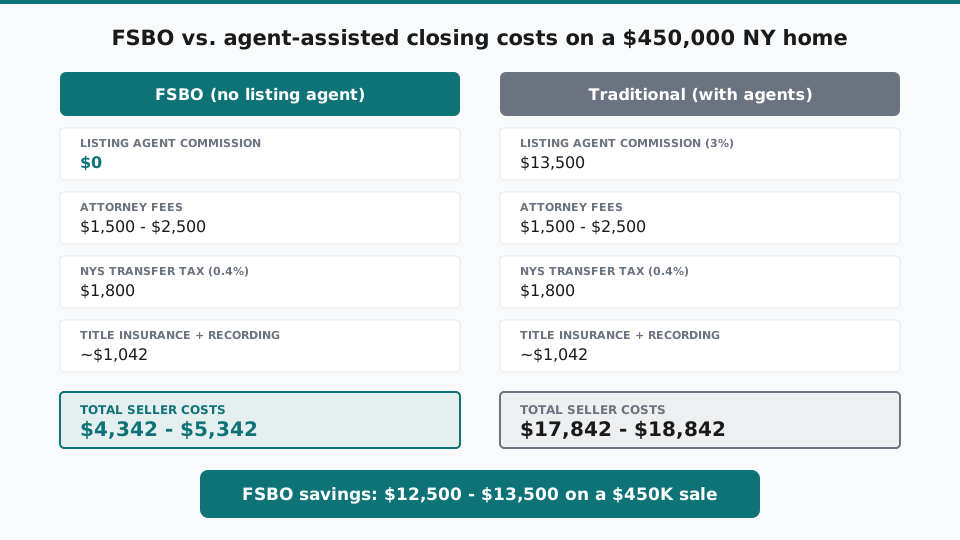
The good news? That attorney who drafts your contract also handles your closing, negotiates the contract terms, and manages the entire transaction. For $1,500 to $3,000, you’re getting a professional who replaces both the listing agent and the title company. Compare that to the $13,500 you’d hand over in listing agent commissions alone on a $450,000 sale at 3%.
Here’s how the New York purchase agreement works, where to get the standard form, and what changed in 2024 that every FSBO seller needs to know.
The standard contract: NYSBA residential contract of sale
The most widely used residential purchase contract in New York is the “Residential Contract of Sale,” jointly prepared by the New York State Bar Association, the NYC Bar Association, the New York County Lawyers’ Association, and the New York State Land Title Association.
It’s about 7 pages and covers the essentials: property identification, purchase price and payment schedule, mortgage contingency terms, title provisions, closing date, risk of loss, default remedies, and broker commission provisions. Your attorney will supplement the base form with riders (additional provisions) specific to your deal.
Common riders include:
- Mortgage contingency rider with detailed financing terms and deadlines
- Inspection rider (standard for single-family homes, less common for NYC co-ops)
- Lead paint rider for pre-1978 homes
- “As-is” rider if you won’t make repairs
- Post-closing possession rider if you need to stay in the house after closing
FSBO sellers absolutely can and should use this standard form. Every real estate attorney in the state knows it by heart. It’s been tested in litigation. And it signals to the buyer’s attorney that you’re working with someone who knows what they’re doing.
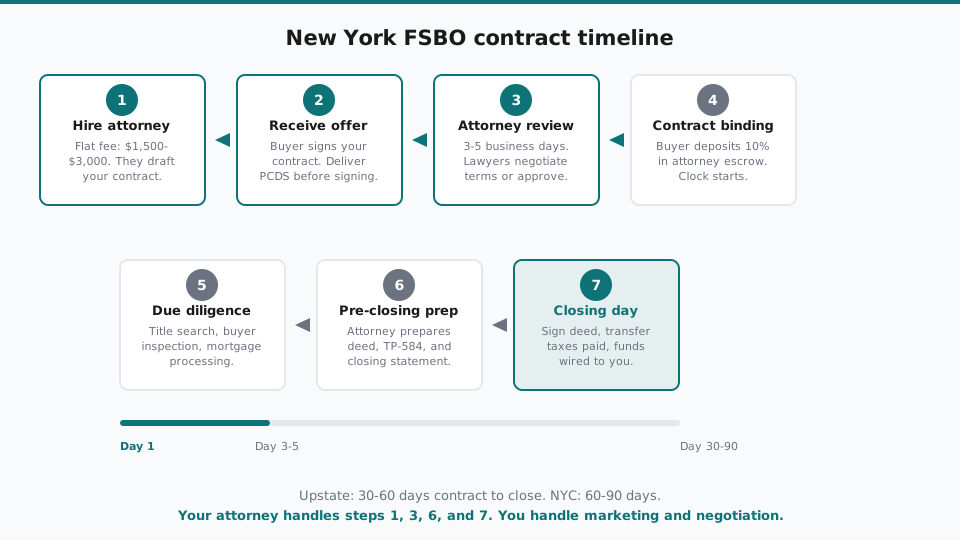
Your first move: Call two or three real estate attorneys in your area. Ask what they charge for a flat-fee FSBO closing that includes contract drafting, title review, and closing coordination. Get someone lined up before you have a buyer. When an offer comes in, you hand it to your attorney and they take it from there.
What your purchase agreement must include
New York’s Statute of Frauds (General Obligations Law Section 5-703) requires all real estate contracts to be in writing and signed by the party being bound. Oral agreements to sell a house are void. Your attorney will handle the drafting, but you should know what goes into the contract so you can have informed conversations about terms.
Parties and property
Full legal names of every buyer and seller. The property address plus the legal description from your deed, including the tax lot and block numbers. Your attorney needs the legal description to prepare the deed, so dig out your current deed or check your county’s online property records now.
Purchase price and payment breakdown
The total price, stated in both numbers and words, broken into the down payment (typically 10% in New York, held in escrow by the seller’s attorney), financing amount, and balance due at closing. Be specific about when each payment is due and who holds the escrow.
Attorney review period
This is where New York does things differently from most states. The attorney review period (typically 3 to 5 business days after both parties sign) gives each side’s lawyer a chance to review the contract, propose changes, or kill the deal entirely. It’s not a statutory right like in New Jersey, but it’s standard practice in virtually every residential transaction in the state.
During this window, either attorney can disapprove the contract for any reason. Think of it as a built-in cooling-off period. Once the attorney review period ends without objection, the contract is fully binding.
Mortgage contingency
If the buyer is financing, the contract should specify the loan type (conventional, FHA, VA), the loan amount, maximum interest rate, and a deadline for obtaining a mortgage commitment letter. Typical mortgage contingency periods run 30 to 60 days. If the buyer can’t get approved, they can cancel and get their deposit back.
For cash buyers, demand a proof of funds letter or recent bank statement showing liquid assets that cover the purchase price. Don’t take their word for it.
Closing date
Manhattan and NYC transactions typically close 60 to 90 days after contract signing. Upstate and suburban deals are faster, usually 30 to 60 days. Your contract should specify whether the closing date is a “time is of the essence” deadline (miss it and you’re in default) or a target date with flexibility. Your attorney will advise on which makes sense for your situation.
Type of deed
New York sellers most commonly deliver a bargain and sale deed with covenants against grantor’s acts. This is different from the general warranty deeds used in many other states. Your attorney will prepare the right deed type and make sure the contract specifies it.
The 2024 PCDS overhaul: no more $500 buyout
This is the biggest change to New York real estate disclosure law in two decades, and most sellers don’t know about it yet.
Before March 20, 2024, New York sellers had a choice: fill out the Property Condition Disclosure Statement (PCDS) or just hand the buyer a $500 credit at closing. In practice, almost nobody filled out the form. The $500 credit was cheaper and easier, and attorneys routinely advised clients to take the credit rather than risk disclosing something that could become a negotiation point.
That option is gone. The legislature eliminated the $500 credit. Now you must complete the PCDS. No exceptions (unless you fall into a narrow list of exemptions like foreclosure sales, court-ordered transfers, or new construction with a builder’s warranty).
What the PCDS covers
The updated form (DOS-1614-f, revised July 2025) has 56 questions covering:
- Structural condition: roof, foundation, walls, basement
- Mechanical systems: plumbing, electrical, HVAC, water heater
- Environmental issues: asbestos, lead paint, radon, underground storage tanks (17 questions are environmental)
- Water and flooding: 7 new flood-risk questions added in 2024
- Pest issues: termites, wood-destroying insects
- Mold and water damage history
- Zoning, boundary disputes, easements, liens
For each question, you answer “Yes,” “No,” “Unknown,” or “Not Applicable.” You’re disclosing based on your actual knowledge. If you genuinely don’t know whether there’s radon in the basement, “Unknown” is an honest answer. But don’t mark “Unknown” on things you do know about. New York still follows the caveat emptor doctrine, but the PCDS erodes that protection. If a buyer proves you knew about a defect and hid behind “Unknown,” you’re looking at open-ended liability, not a $500 slap on the wrist.
The new flood risk questions
The 2024 amendment added 7 questions specifically about flood risk. You’ll need to know whether your property is in a FEMA-designated floodplain (100-year or 500-year), whether you have flood insurance, whether you’ve ever filed a flood insurance claim, and whether you’ve received FEMA assistance for flood damage. If you’re in a flood zone and you don’t disclose it, the buyer’s attorney will find out during the title search anyway, and your credibility takes a hit.
Other required disclosures
Beyond the PCDS, New York FSBO sellers need to provide:
Federal lead-paint disclosure. If your home was built before 1978, you must disclose known lead-based paint hazards, provide any existing reports, hand over the EPA pamphlet, and give the buyer 10 days to get a lead inspection. The penalty for skipping this is up to $19,507 per violation plus triple damages in private lawsuits. Don’t skip it.
Sex offender registry notice. Your contract must include a notice telling the buyer they can check the state sex offender registry through the Division of Criminal Justice Services. You don’t have to proactively disclose whether offenders live nearby. You just have to tell the buyer the registry exists. Your attorney’s standard contract will include this.
Smoke and carbon monoxide detectors. The property must have working smoke detectors and CO detectors per Executive Law Section 378-a. Your attorney will require certification at closing.
Bed bug disclosure (NYC only). If you’re selling a co-op or condo in the city, you must disclose the bed bug infestation history for the prior year.
What you don’t have to disclose
New York has a “Ghostbusters Law” (RPL Section 443-a) that protects sellers from having to disclose deaths on the property, including homicides and suicides. You also don’t have to disclose the presence of nearby sex offenders (the registry notice handles that) or, thanks to the famous Stambovsky v. Ackley case, paranormal activity.
New York closing costs for sellers
New York’s transfer taxes are where the math gets interesting, especially if you’re in the city. Here’s what a FSBO seller should budget:
Upstate/suburban New York ($450,000 sale)
| Cost item | Amount |
|---|---|
| Attorney fees | $1,500 - $2,500 |
| NYS transfer tax (0.4%) | $1,800 |
| Title insurance (owner’s policy) | ~$990 |
| Recording fees | ~$52 |
| Prorated property taxes | Varies |
| Total (excluding payoff and buyer agent) | ~$4,342 - $5,342 |
That’s roughly 1% to 1.2% of the sale price in hard closing costs. Compare that to the 5-6% you’d pay with a traditional agent arrangement.
New York City ($885,000 sale, the current NYC median)
| Cost item | Amount |
|---|---|
| Attorney fees | $2,500 - $5,000 |
| NYS transfer tax (0.4%) | $3,540 |
| NYC RPTT (1.425%) | $12,611 |
| Title insurance | ~$1,947 |
| Recording fees | ~$52 |
| Total (excluding payoff and buyer agent) | ~$20,650 - $23,150 |
NYC sellers get hit with the city’s Real Property Transfer Tax on top of the state transfer tax. At 1.425% for homes over $500,000, the NYC RPTT alone is $12,611 on an $885,000 sale. You can’t avoid this whether you sell FSBO or with an agent. But by selling FSBO and skipping the listing agent’s 2.5-3% commission, you’re saving $22,125 to $26,550 on that same $885,000 property. Even after paying your attorney $5,000, the savings are massive.
If the sale price hits $1 million, the buyer pays a 1% state mansion tax ($10,000 on a $1M sale). That’s the buyer’s cost, not yours, but know about it because it affects the buyer’s total outlay and their willingness to negotiate.
Why your attorney matters more in New York than any other state
In most states, a real estate agent handles the initial contract, a title company does the title search, and an escrow officer manages the closing. In New York, your attorney does all of it. They draft the purchase agreement, negotiate terms with the buyer’s attorney, review the title search, prepare the deed and transfer tax forms (the TP-584 and RP-5217), hold the earnest money in their escrow account, and conduct the closing.
For a FSBO seller, this is actually an advantage. Instead of coordinating between an agent, a title company, and a closing attorney, you have one person handling everything. And they’re legally obligated to represent your interests, unlike a buyer’s agent who owes you nothing.
Budget $1,500 to $3,000 for a flat-fee FSBO closing upstate or in the suburbs. In NYC, expect $2,500 to $5,000. Even at the high end, you’re spending a fraction of the $13,500 to $27,000 you’d lose in agent commissions on a $450,000 sale.
One important note: both sides should have separate attorneys. The buyer’s attorney and your attorney are different people with different jobs. Dual representation (one lawyer for both) creates conflicts of interest and is strongly discouraged by the NYC Bar Association. Don’t let a buyer suggest you share a lawyer to save money.
How the NAR settlement affects New York FSBO sales
The 2024 NAR settlement changed how buyer agent commissions work everywhere, including New York. As of August 2024, buyer agent compensation can no longer be displayed on the MLS. Buyers must sign a written representation agreement with their agent before touring homes. And in New York City, the Real Estate Board of New York’s Residential Listing Service adopted these rules in January 2025.
For FSBO sellers, this means you’ll get the question: “Are you offering buyer agent compensation?” You’re not required to offer anything. If you want to attract represented buyers, you can advertise compensation off the MLS through your listing description, yard sign, or direct conversations with agents.
If an unrepresented buyer shows up (increasingly common now that buyers are responsible for their agent’s fee), you’ll want a plan for handling that transaction. Your attorney can guide both of you through the contract process, but each side still needs their own counsel.
For the full breakdown of what changed, read Selling FSBO after the NAR settlement and Do sellers have to pay the buyer’s agent?.
Five mistakes New York FSBO sellers make
Trying to draft their own contract
I get the impulse. You’re selling FSBO to save money, so why not write the contract too? Because New York law doesn’t let non-lawyers draft real estate contracts. And even if it did, the buyer’s attorney will shred a DIY contract in the attorney review period. Spend the $1,500 to $3,000 on an attorney who does this every day. The contract they produce will hold up, the closing will go smoothly, and you’ll still save five figures in commissions.
Ignoring the new PCDS requirement
The $500 credit is gone. If you don’t complete the Property Condition Disclosure Statement, you’re not just risking a $500 penalty anymore. You’re opening yourself to whatever legal remedy a buyer can pursue. Fill out the form honestly. Disclose what you know. Have your attorney review it before you hand it to the buyer.
Setting a 10% down payment without flexibility
The 10% down payment held in escrow is standard in New York, but it’s not a legal requirement. Some buyers, especially first-time buyers using FHA loans, can’t put 10% into escrow. Your attorney can negotiate a lower deposit if the buyer is otherwise strong. Don’t lose a good offer over escrow percentages.
Skipping the inspection (NYC sellers especially)
In NYC, the standard practice is for buyers to inspect before signing the contract, not after. If you’re selling a house, townhouse, or property outside Manhattan, an inspection contingency in the contract is normal. Don’t resist it. A clean inspection report strengthens the deal. A buyer who discovers problems after closing will come after you with the PCDS as evidence.
Not addressing buyer agent compensation in the contract
Post-NAR settlement, the purchase agreement should clearly state whether the seller is offering any compensation toward the buyer’s agent fee. If you leave it ambiguous, it becomes a last-minute negotiation that can delay or kill the closing. Address it upfront in the contract. Even if the answer is “seller will not pay buyer agent compensation,” put it in writing.
After the contract: what happens at closing
Once both attorneys sign off and the attorney review period ends, the contract is binding. The buyer’s attorney orders a title search. Your attorney prepares the deed, the TP-584 transfer tax return, and the RP-5217 equalization form. The buyer’s lender (if financing) orders an appraisal and processes the mortgage.
At closing, you’ll sign the deed, the transfer tax forms, the closing statement, and any required affidavits. The buyer signs their mortgage documents. The buyer’s attorney distributes funds: your mortgage gets paid off, transfer taxes go to the state, your attorney gets their fee, and the rest goes to you.
Verify wire instructions by phone before closing day. Wire fraud in real estate transactions is a growing problem in New York, especially in NYC where the dollar amounts are high. Don’t trust emailed wire instructions without voice confirmation.
For the full list of documents you’ll need at closing, check the FSBO closing checklist.
Your next step: find a real estate attorney who handles FSBO closings in your county. Ask for a flat-fee quote that includes contract drafting, title review, and closing. Get the relationship in place now, and when a buyer shows up, you’ll be ready to hand them a professional contract instead of scrambling to figure out what comes next.
Keep reading
How to handle unrepresented buyers when selling FSBO
More buyers are ditching agents after the NAR settlement. Here's how to sell your home directly to an unrepresented buyer, what paperwork you need, and why this is the best deal a FSBO seller can get.
Florida FSBO disclosure requirements: what you must tell the buyer
Florida FSBO sellers must disclose known material defects plus flood, HOA, property-tax, sewer, radon, and lead-paint notices.

Skip the agent, hire an attorney
A real estate attorney costs $500-$3,000, handles the entire legal side of your sale, and has 7+ years of legal education. Your agent has a few months of coursework and charges $24,000. The choice isn't hard.