Florida FSBO disclosure requirements: what you must tell the buyer
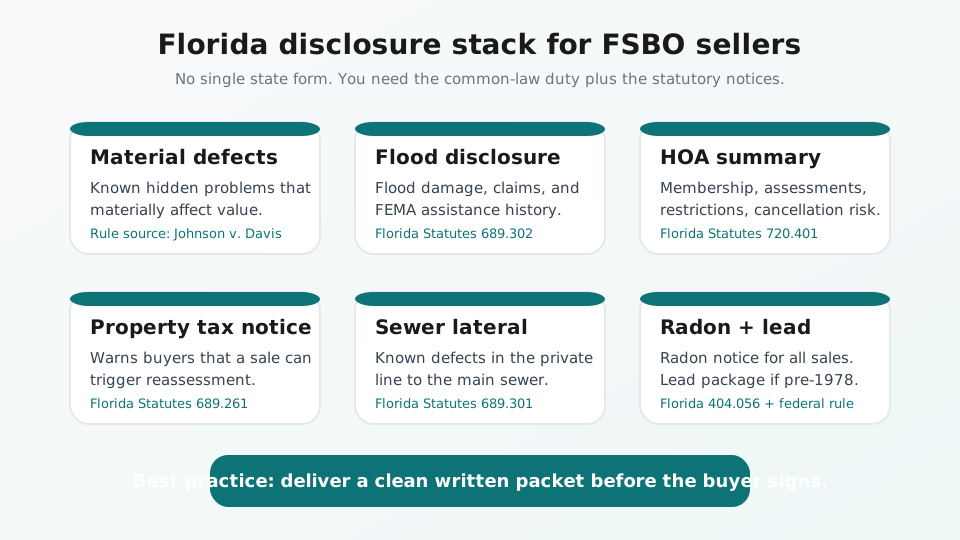
Florida does not give you one statewide seller disclosure form and call it done. But Florida is not a casual disclosure state. Under Johnson v. Davis, you must tell the buyer about known facts that materially affect value and are not readily observable. Then Florida layers on separate disclosures for flood risk, property taxes, HOA membership, sanitary sewer laterals, radon, and lead-based paint. Miss one and you can hand the buyer either a cancellation right or a lawsuit.
New to FSBO? Start with the main FSBO guide. This post assumes you’re already getting your Florida paperwork together.
Florida does not have one master disclosure form
Unlike Texas, Florida does not hand you a single state-issued seller disclosure notice. The main rule comes from the Florida Supreme Court. In Johnson v. Davis, the court held that when a seller knows about facts materially affecting the value of the property, and the buyer cannot readily observe those facts, the seller has to disclose them.
That means Florida disclosure is less about one official form and more about building a clean written disclosure packet. In practice, most Florida attorneys use a written seller disclosure sheet alongside the standard Florida purchase agreement. Do not confuse “no state form” with “no disclosure duty.” Not even close.
| Disclosure | When it needs to go out | What it covers |
|---|---|---|
| Material defects | Before the buyer signs, ideally before listing | Known hidden problems that materially affect value |
| Flood disclosure | At or before contract execution | Flood damage during your ownership, flood claims, FEMA help |
| Property tax summary | At or before contract execution | Warning that reassessment can raise taxes after sale |
| HOA disclosure summary | Before contract execution | Mandatory membership, assessments, restrictions, lien risk |
| Sewer lateral disclosure | Before contract execution | Known defects in the private line to the main sewer |
| Radon notice | On a document signed at or before contract | Statutory radon warning language |
| Lead-based paint | Before sale, for pre-1978 homes | Known lead hazards, records, pamphlet, 10-day test window |
What Florida expects you to disclose about the house itself
The clean rule from Johnson v. Davis is simple. If you know about it, it matters to value, and a buyer would not spot it during an ordinary walk-through, disclose it in writing.
In Florida, that usually means roof leaks that only show up in summer storms, prior water intrusion, mold remediation, recurring AC failures, sinkhole or settlement issues, sewer backups, septic trouble, and unpermitted work. A patched ceiling stain. A painted-over crack. A garage conversion the county never approved. Those are lawsuit facts.
You are not required to hire an inspector on yourself just to create new knowledge. But you are required to be honest about the knowledge you already have. That is a big difference. If you want the broader 50-state version first, read the general seller’s disclosure guide. Florida is the state-specific layer on top.
The Florida-specific disclosures that trip sellers up
Flood disclosure
Florida’s new flood disclosure statute is one of the easiest places to make a mistake because sellers assume flood disclosure only matters in FEMA zones. The statute says otherwise. You have to disclose whether flooding damaged the property during your ownership, whether you filed an insurance claim for flood damage, and whether you received FEMA or similar disaster assistance.
And Florida defines flooding broadly here. The statute includes not just overflowing rivers or tidal water, but also sustained standing water from rainfall. If your backyard or first floor took water after repeated storm events, that is not a detail to freestyle away in a phone call. Put it on the disclosure.
HOA disclosure summary
If the property is subject to mandatory HOA membership, section 720.401 requires a disclosure summary before the contract is signed. This summary tells the buyer they are joining an HOA, paying assessments, living under recorded covenants, and potentially facing special assessments and liens if those charges go unpaid.
This one has teeth. If the buyer gets the HOA disclosure late, the statute gives them a window to cancel: three days after receipt or any time before closing, whichever comes first. If you’re selling in an HOA community, get this into the contract package up front. Do not treat it like closing-table paperwork.
Property tax, sewer, radon, and lead
These are the quieter disclosures, but they still matter:
- Property tax disclosure: Florida requires a summary telling the buyer not to rely on your current tax bill, because a change in ownership can trigger reassessment and a higher tax number next year.
- Sanitary sewer lateral disclosure: If you know the private line connecting the house to the main sewer is defective, you have to say so before the contract is signed.
- Radon notice: Florida requires the statutory radon warning on at least one document executed at or before contract.
- Lead-based paint: If the home was built before 1978, federal law requires you to disclose known lead hazards, hand over any reports, give the buyer the EPA pamphlet, and offer a 10-day chance to test for lead unless that right is waived.
“As is” does not let you play dumb
This is where Florida sellers get themselves in trouble. “As is” means the buyer is taking the property in its current condition. It does not erase Johnson v. Davis. It does not erase the flood disclosure statute. It does not erase the HOA summary. And it definitely does not erase the federal lead rule.
If your roof leaked last August and you know it, “as is” does not turn that into a secret. It just means you are not promising to fix it. Smart FSBO sellers disclose first and negotiate later. Clean disclosure turns a defect into a pricing conversation. Hidden disclosure turns it into a fraud claim.
How to handle Florida disclosures without making a mess
Start by pulling the paper trail before you accept offers. Insurance claims, roof invoices, mold or water-remediation receipts, permits, HOA documents, FEMA correspondence, sewer repair invoices, and any old inspection reports. If you have the paperwork, your attorney can turn a messy memory into a clean disclosure.
Then use a written disclosure sheet even though Florida does not mandate one statewide form. That written record protects you. Two years from now, if a buyer says you hid a recurring leak, your signed disclosure is the first thing your attorney will want to see.
Finally, send the whole packet through your Florida real estate attorney before the buyer signs the contract. This is exactly why you hired them. A Florida closing attorney costs a fraction of an agent commission and is much cheaper than litigating over a defect you should have disclosed in the first place.
Your Florida disclosure checklist
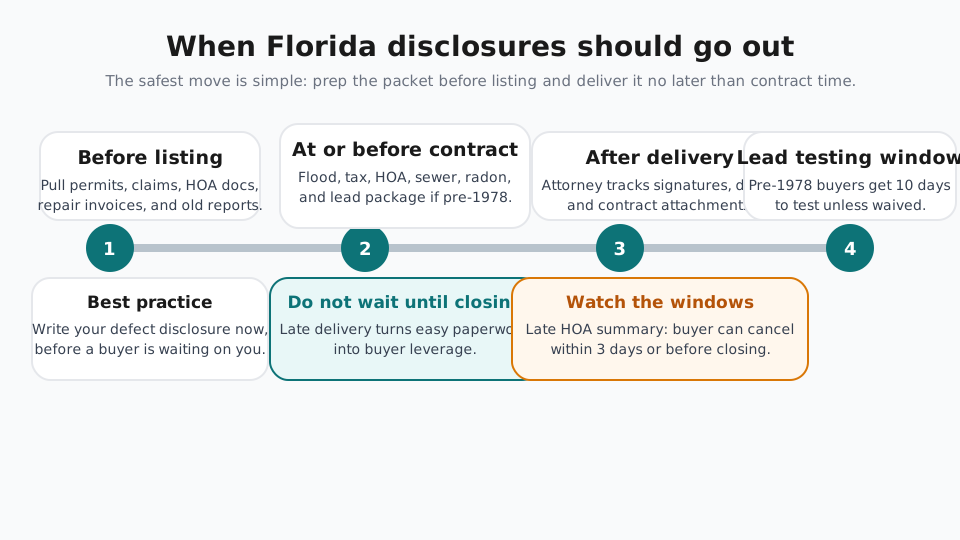
Before you sign a Florida contract, have these ready:
- A written seller disclosure covering any known latent material defects
- The statutory flood disclosure
- The property tax disclosure summary
- The HOA disclosure summary, if the property is in a mandatory HOA
- Sewer lateral disclosure, if you know of a problem
- The radon warning on a signed pre-contract or contract document
- The federal lead-paint package, if the home was built before 1978
- Your closing attorney reviewing the full packet before delivery
Your next move: build the disclosure packet before you accept offers, not after. Pull your claims history, permit records, HOA documents, and repair invoices tonight, then send the stack to your attorney. Clean paperwork is cheaper than a post-closing fight, and Florida gives buyers plenty of ways to use sloppy disclosures against you.
Keep reading

What is a buyer representation agreement (and why sellers should care)
Since August 2024, every buyer's agent must have a signed compensation agreement before showing homes. Here's what that agreement says, what it means for FSBO sellers, and how to handle it.
California FSBO disclosure requirements: what you must tell the buyer
California FSBO sellers usually need a TDS, NHD, tax notices, HOA documents, lead-paint paperwork, and newer 2025-2026 disclosures.
Free FSBO purchase agreement template for Ohio
Ohio FSBO sellers don't need a Realtor's form to write a valid purchase contract -- here's which forms to use, what each section covers, and the regional quirks that trip sellers up.