Free FSBO purchase agreement template for Michigan
Michigan does not hand FSBO sellers a state-issued purchase contract the way Texas does. Your agreement still has to be in writing and signed by both sides, and the safest move is to start with a Michigan residential purchase agreement template your attorney recognizes, then attach the Seller’s Disclosure Statement and any required addenda before you sign. Skip those pieces and you can turn a clean deal into a legal mess.
New to FSBO? Start with the main FSBO guide. This post assumes you’re at the contract stage and want the Michigan paperwork right the first time.
Here’s where to get a free template, what the contract has to say, which Michigan disclosures belong with it, and the mistakes that cost sellers money.
What Michigan sellers should use
Michigan does not publish a one-size-fits-all residential purchase agreement on a state website. What Michigan law cares about is that the deal is in writing and signed. The State Bar of Michigan says a purchase agreement is generally enforceable if it accurately describes the property, lays out the sale terms, and both buyer and seller sign it.
That leaves FSBO sellers with three practical options.
1. Have your attorney draft the contract from scratch. This is the cleanest route if your deal has any wrinkles: seller financing, an as-is sale, a condo with odd rules, a short closing, or a messy repair fight.
2. Start with a free Michigan residential purchase agreement template. A site like eForms gives you a usable blank shell. Use it to organize the deal, not to replace legal review.
3. Review the buyer’s agent form with your attorney. If the buyer has an agent, they may send over a brokerage or Michigan REALTORS form. That’s fine. You still want your own attorney marking it up before you sign.
When I sell FSBO, I don’t care where the first draft came from. I care whether my attorney can review it fast, whether the title company can close it without drama, and whether the contract clearly says who owes what.
What the template has to cover
Michigan’s statute of frauds, MCL 566.108, says contracts for the sale of land have to be in writing and signed. That sounds basic, but it has real consequences. If a term matters, it belongs in the purchase agreement or a signed addendum. Not in a text thread. Not in an email chain. Not in a verbal “we’ll figure that out later.”
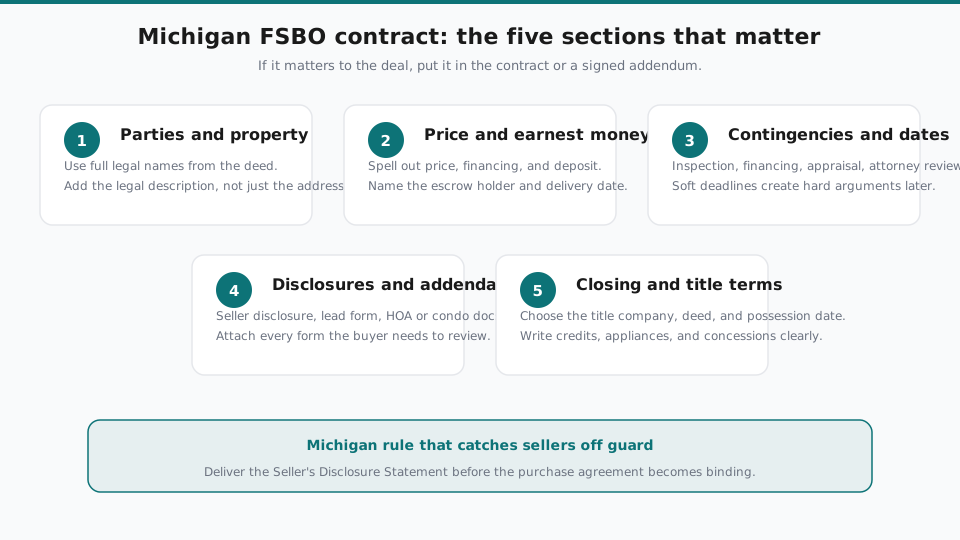
Here are the sections that matter.
Parties and property description
Use the full legal names of the seller and buyer. Match the names on the deed. Then use the real legal description of the property, not just the street address. Pull it from your deed or county records.
Purchase price and earnest money
Spell out the total price, down payment or financing amount, and the earnest money deposit. Don’t hold earnest money yourself. Have the title company or the attorney escrow hold it, and say exactly when the buyer has to deliver it.
Contingencies and deadlines
This is where deals live or die. The contract should say whether the buyer has a financing contingency, an inspection contingency, an appraisal contingency, and any attorney-approval language. Put dates on all of them. Michigan does not hand you a free attorney-review window after the fact. If you want one, write it in.
Closing, title, and possession
Name the title company or closing attorney, the closing date, who pays which closing costs, what kind of deed you’re delivering, and when the buyer gets possession. If you need a post-closing occupancy agreement because you need a few extra days in the house, write it down now.
Personal property, credits, and buyer-agent fees
If the refrigerator stays, say it. If you’re giving a repair credit, say it. If you’re offering anything toward the buyer’s agent fee or other closing concessions, put the exact dollar amount or percentage in the contract. Post-NAR, vague language here is how sellers accidentally give money away.
For the bigger picture on that issue, read do sellers have to pay the buyer’s agent? and how to advertise buyer agent compensation off the MLS.
The Michigan forms that should ride with the contract
This is the part sellers miss. The purchase agreement is only one piece of the packet.
Seller’s Disclosure Statement
Michigan’s Seller Disclosure Act requires most sellers to deliver the written disclosure before the buyer signs a binding purchase agreement. If you deliver it late, the buyer gets a termination window: 72 hours if you handed it to them in person, 120 hours if it went by registered mail.
The form itself is detailed but not scary. It asks about the roof, basement or crawl space water, plumbing, electrical, heating, insulation, boundaries, environmental issues, and more. It also says right on the form that if something changes in the structural, mechanical, or appliance systems before closing, you have to update the buyer.
The standard is what you actually know. Michigan is not asking you to tear open walls or hire an inspector for your own disclosure. It is asking you to be honest.
We’ve already broken the disclosure piece down here: what is a seller’s disclosure and what do you need to include?
Lead-based paint disclosure
If the home was built before 1978, federal law requires the lead-based paint disclosure and the EPA pamphlet. No exceptions for FSBO. No “the buyer already knows it’s an old house” shortcut. Put it in the packet.
HOA, condo, or special addenda
If the property is in an HOA or condo association, attach the documents the buyer needs to review. If the buyer is financing, make sure the financing contingency language is attached and clear. If the home is being sold as-is, say that explicitly while still delivering the disclosure forms.
Proof of funds or preapproval
This is not technically a disclosure form, but it belongs in the file. A cash buyer should produce proof of funds. A financed buyer should hand over a current preapproval letter. If they can’t do that, they’re not ready to tie up your house.
Michigan closing items sellers forget about
The contract gets the attention. The closing paperwork is where sellers get surprised.
Transfer taxes
Michigan sellers usually pay the transfer tax unless an exemption applies. Treasury publishes two pieces: the county transfer tax at $0.55 per $500 of value, and the state transfer tax at $3.75 per $500. Together that’s $4.30 per $500, or 0.86%.
On a $300,000 sale, the math looks like this:
| Tax | Rate | Cost on $300,000 |
|---|---|---|
| County real estate transfer tax | $0.55 per $500 | $330 |
| State real estate transfer tax | $3.75 per $500 | $2,250 |
| Total | $4.30 per $500 | $2,580 |
That number comes straight off your proceeds. Budget for it early so you don’t act shocked at the closing table.
Property Transfer Affidavit
After the transfer, Michigan Treasury says the buyer has 45 days to file the Property Transfer Affidavit, Form 2766, with the local assessor. That’s technically the buyer’s job, but smart sellers mention it before closing so the deal doesn’t get messy later.
Title and deed prep
Michigan does not require attorney participation in residential closings, but that doesn’t mean you should wing this part. The title company handles the settlement statement, deed recording, and fund disbursement. Your attorney should still be the person reading the contract language and any last-minute addenda before you sign.
Wire instructions
Verify wire instructions by phone with the title company. Every time. Real estate wire fraud is a boring warning until the day somebody loses $40,000 to a spoofed email.
The mistakes that cost Michigan FSBO sellers money
Signing a free template without lawyer review
A free template is fine as a starting point. Treating it as the finished product is how you end up with missing contingency language, vague repair terms, or blank spots that matter once the buyer gets cold feet.
Delivering the disclosure late
Michigan is unusually clear here. The disclosure belongs in the buyer’s hands before the purchase agreement becomes binding. If you wait until after signatures, you hand the buyer a clean exit ramp.
Keeping terms off the contract
If you agreed to leave the washer and dryer, write it down. If you’re giving a $5,000 roof credit, write it down. If you’re paying anything toward the buyer’s agent fee, write it down. The contract is where good intentions become enforceable terms.
Using soft deadlines
“Inspection to happen soon” is not a deadline. “Financing contingency ends 21 days after acceptance” is. Dates protect sellers. Without them, the buyer can drag the transaction and keep your house off the market while they decide how serious they are.
Forgetting Michigan is still buyer-beware
Michigan’s disclosure law protects honest sellers who disclose what they know. It does not protect sellers who play cute with known defects. If the basement has seeped twice, say it. If the furnace only works because you kick the side panel, say that too.
The clean way to handle a Michigan FSBO contract
Use a free Michigan template if you want a head start. Fill in the business terms. Attach the Seller’s Disclosure Statement and the lead form if the house is pre-1978. Then pay a Michigan real estate attorney to review the package before anyone signs.
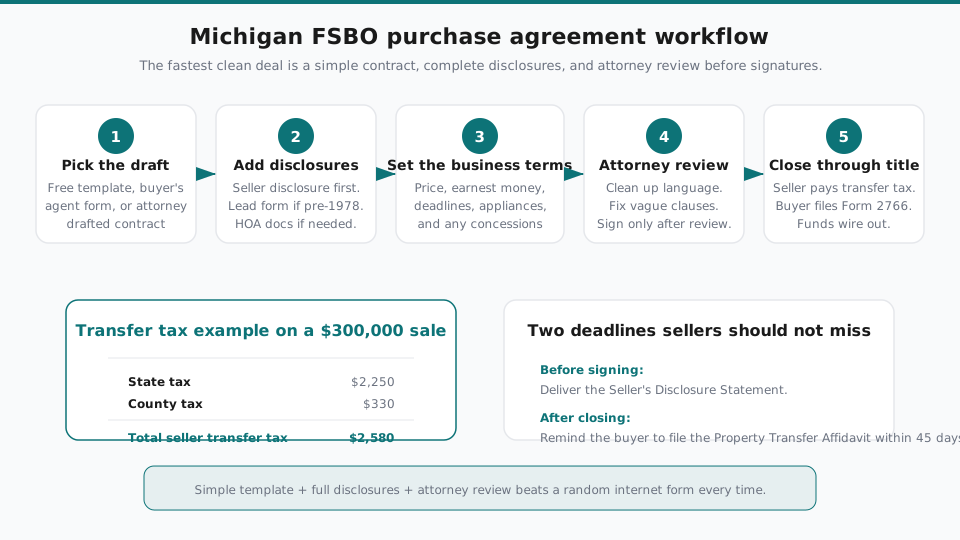
That is the whole play. Not glamorous. Very effective.
Your next move: get a blank Michigan purchase agreement template open today, pull your deed, fill in the business terms, and send the draft to a real estate attorney for review. Then keep moving with the FSBO closing checklist, skip the agent, hire an attorney, and how to find and hire a real estate attorney.
Keep reading

How to Work with Buyer's Agents When Selling FSBO
86% of buyers have agents. Here's how to work with them professionally, protect your proceeds, and make sure agent-represented buyers actually see your home.

Best flat fee MLS services in Ohio (2026)
A side-by-side comparison of Ohio flat fee MLS companies, with real pricing, local MLS coverage questions, and the closing-fee math sellers miss.

Selling a House FSBO During Divorce: Legal Considerations
A practical, cautious framework for spouses considering a for-sale-by-owner home sale during divorce: authority, title, pricing, closing, taxes, and professional help.