How to sell an inherited house FSBO: probate and tax guide
You can sell an inherited house FSBO. But family saying “it’s yours” is not the same thing as having legal authority to sign a purchase agreement and deed. Before you list, figure out who has power to sell, lock down the date-of-death value for tax basis, and get every heir on the same page about whether this house is being sold, kept, or bought out.
The tax side is usually less painful than people expect. The IRS says inherited property generally gets a basis equal to the fair market value on the date of death, which is why many heirs owe far less capital gains tax than they fear if the house is sold reasonably soon. The part that causes delays is usually not the tax. It’s probate, paperwork, and sibling gridlock.
New to FSBO? Start with the main guide. This post focuses on the inherited-house version of the process, where title authority and estate paperwork matter as much as pricing and photos.
First question: can you sell it yet?
When someone says, “I inherited the house,” they’re usually talking about the end result. The legal reality is messier.
In some cases, title passes outside full probate. A house held in joint tenancy can pass to the surviving owner without probate. A house in a revocable living trust can also avoid a full probate proceeding. Some states also allow transfer-on-death deeds. Clark County, Washington’s law library explains that a transfer-on-death deed lets real property pass to a named beneficiary after death. California courts also note that joint tenancy and revocable living trust property can stay outside the normal probate valuation process.
In other cases, you need court authority before anybody lists anything. Utah courts say probate is required when an estate includes real property, and the court-appointed personal representative handles selling property, paying debts and taxes, and distributing what is left. The same guide explains that the court issues Letters Testamentary or Letters of Administration, and those letters are what title companies and buyers look for.
That means your first job is not staging the kitchen. It is figuring out which bucket the house falls into:
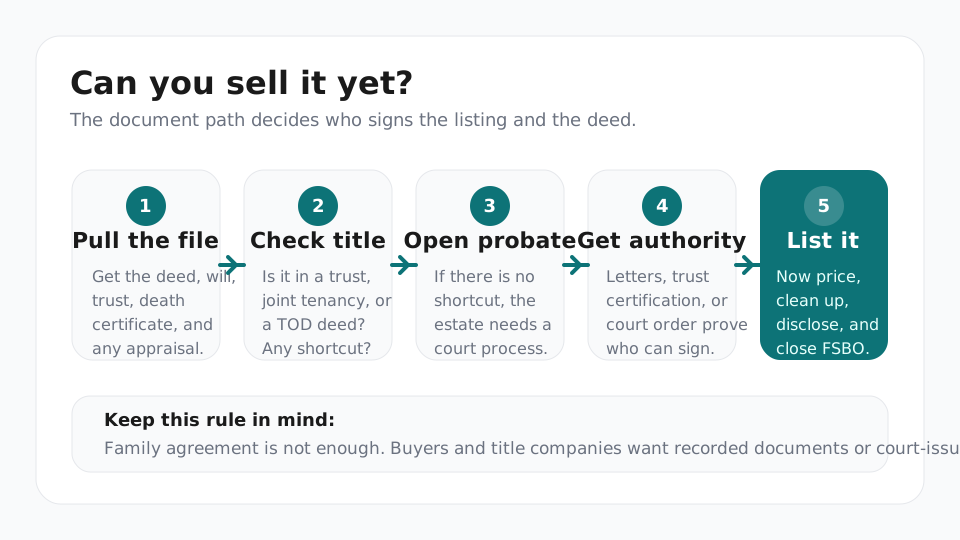
- Trust or joint tenancy: you may be able to sell without opening a full probate case, but you still need the recorded documents that prove it.
- Transfer-on-death deed: some states allow it, some do not. Pull the recorded deed before you assume anything.
- Small-estate shortcut: some states offer simplified transfers, but the rules can be tight. Utah says a small-estate affidavit cannot be used if there is real property. California lets certain small real-property transfers use separate court forms, but only within strict value limits.
- Full probate: the personal representative signs the listing paperwork and closing documents, not whichever sibling grabbed the spare key first.
If you are not sure which path you are on, call a probate or real estate attorney before you order a yard sign. This is where a few hundred dollars of legal advice can save months of delay.
Build the estate file before you talk price
Inherited-house sales go off the rails when the family treats the house like a normal resale. It isn’t. You need an estate file.
Pull together:
- death certificate
- will or trust
- Letters Testamentary or Letters of Administration, if the estate is in probate
- current deed
- mortgage payoff information, if there is a loan
- property tax bills, insurance policy, HOA statements, and utility information
- any appraisal done for probate or tax purposes
- repair invoices, permits, and receipts
- a list of every person with an ownership interest or beneficiary claim
Do this before you clean out the garage. Buyers can wait a week for mulch. Title companies cannot close without authority documents.
If there are multiple heirs, circulate the file to everybody. Same documents. Same numbers. Same timeline. Half of sibling fights happen because one person thinks the house is worth $480,000, another thinks it’s worth $420,000, and nobody is working from the same paperwork.
The tax math is usually better than people think
This is the part that scares most families, and it is usually the part they overestimate.
The IRS FAQ on inherited property says inherited property generally gets a basis equal to the fair market value on the date of death. IRS Publication 523 says the same thing for inherited homes: your basis is usually the date-of-death fair market value, or the alternate valuation date if the estate elected that on Form 706.
That “step-up” matters. A lot.
If your parent bought the house for $90,000 in 1988 and it was worth $360,000 when they died, your basis is generally around $360,000, not $90,000. If you sell soon after death for about the same number, there may be little or no capital gain to tax.
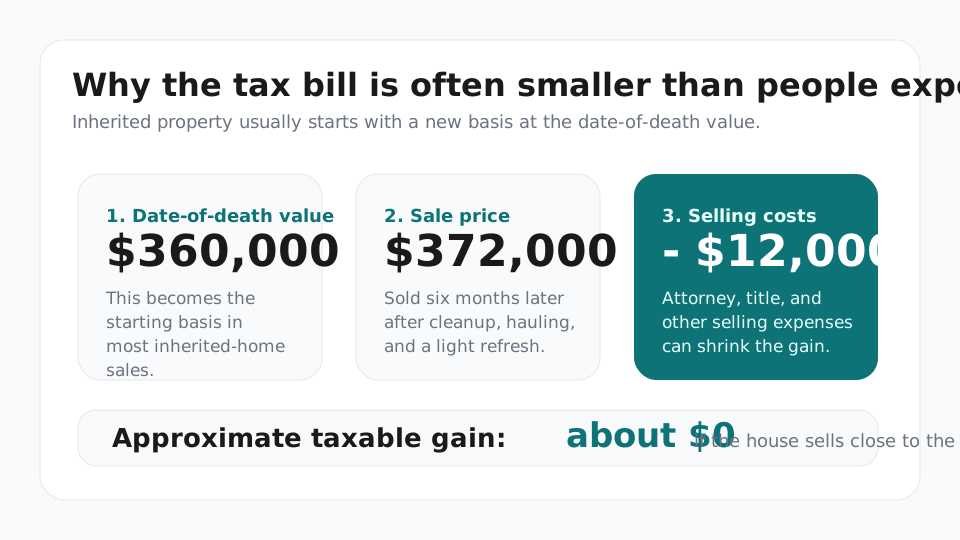
Three rules matter here:
Get a real date-of-death value
Do not guess. Use the probate appraisal, estate appraisal, or the value used for estate tax reporting. Publication 551 says beneficiaries generally use the estate tax value reported by the executor when Form 706 is required. If no federal estate tax return was required, Publication 523 says the home’s appraised date-of-death value is the starting point.
Selling costs still matter
Your sale price is not the same thing as your taxable gain. Commissions you agree to pay, closing costs, legal fees tied to the sale, and similar selling expenses can reduce the amount realized. This is one more reason to keep every invoice.
The clock starts after death
If the house appreciates after the date of death, that increase can be taxable. If you sit on it for two years, renovate it, or rent it while the market jumps, the gain between the date-of-death value and your net sale price is where the tax issue shows up.
Most families also do not owe federal estate tax. The IRS estate tax page says the federal estate tax filing threshold is $15,000,000 for deaths in 2026. State estate or inheritance taxes are a different question, and those rules vary a lot, so ask your CPA or attorney what applies where the decedent lived and where the house sits.
And if the title company issues Form 1099-S, do not ignore it. The IRS says the sale of inherited property is generally reported on Schedule D and Form 8949 when there is a filing requirement. Zero tax due is not the same thing as zero reporting.
One more thing: do not assume the normal $250,000 or $500,000 home-sale exclusion applies just because the property was your parent’s home. That exclusion is for selling your own main home. If you are a surviving spouse or you moved in and met the residency rules later, there may be exceptions. If not, think stepped-up basis first, not home-sale exclusion first.
Decide the sibling plan before you list
Money arguments are predictable. So are inheritance arguments. Put them together and people get weird fast.
The cleanest inherited-house sales happen when the heirs decide upfront which of these three paths they want:
- Sell and split the net proceeds by ownership share.
- One heir keeps the house and buys out the others.
- Everyone keeps the house as a rental, with a written agreement about expenses, repairs, rent, and exit rules.
What does not work is fuzzy consensus.
If one sibling wants to “maybe keep it someday,” another wants cash now, and a third is living in the house without paying carrying costs, you do not have a sale plan. You have a lawsuit warming up in the bullpen.
Set the hard questions early:
- Who is paying insurance, property tax, lawn care, and utilities while the house is vacant?
- If one heir lives there, are they paying rent or at least covering carrying costs?
- Is the house being sold as-is, lightly cleaned up, or renovated?
- If someone wants to keep it, what is the buyout deadline and how will the value be set?
Real estate forums are full of the same inherited-house story: the family waits too long, the house sits half-empty, the utilities stay on, the cleanup gets worse, and everyone gets angrier while the bills keep coming. That part is real.
If you cannot get agreement, get the attorney involved before you list. Sometimes the fix is a buyout. Sometimes it is a mediated agreement. Sometimes your lawyer will explain the partition options in your state. But do not pretend a family stalemate will magically disappear once the first offer comes in.
Prep the house like an estate property, not a vanity project
Once authority and heir agreement are clear, treat the property like a business asset.
Secure insurance first. Vacant inherited houses can create coverage problems if you assume the old homeowner policy still fits. Then walk the house room by room and make three lists:
- safety or lender issues that need attention now
- obvious cleanup and trash-out work
- expensive cosmetic wish-list items that can wait or be skipped
Most inherited homes do not need a Pinterest renovation. They need trash removed, leaks stopped, systems working, and a clean disclosure trail.
If you are selling as-is, say so. But remember what seller’s disclosures still require. “As-is” does not mean “I never lived here so I can say whatever.” If you know the roof leaks, the basement floods, or the furnace died last winter, disclose it.
This is also where a simple pricing strategy beats family folklore. If the house needs work, price the work honestly. If the kitchen is frozen in 1994 but functional, do not sink $40,000 into a flip-grade remodel just because a cousin says it will “add value.” Get a few contractor estimates, then compare the as-is price against the clean-and-list price. The pricing guide and CMA walkthrough help with that part.
The closing paperwork is not optional busywork
Inherited-property closings usually need more paper than regular owner-occupied sales. Expect the buyer’s title company and your attorney to want:
- probate court documents or trust documents proving authority
- death certificate
- deed and vesting information
- payoff statement, if there is a mortgage
- tax and HOA information
- disclosure forms
- any estate-specific approval required by state law or the court
Utah courts note that the personal representative’s job includes paying taxes, selling property when needed, and distributing the remaining proceeds. Translation: you do not promise everyone their check before the title company and attorney finish the estate math.
That is why I would not do this part without a lawyer. Start with how to find and hire a real estate attorney, then keep the FSBO closing checklist open beside you once you are under contract.
Your first three moves this week are simple. Pull the deed. Pull the death certificate. Call the attorney who will tell you whether you are holding a house you can sell now, or a house you only think you can sell now.
Keep reading
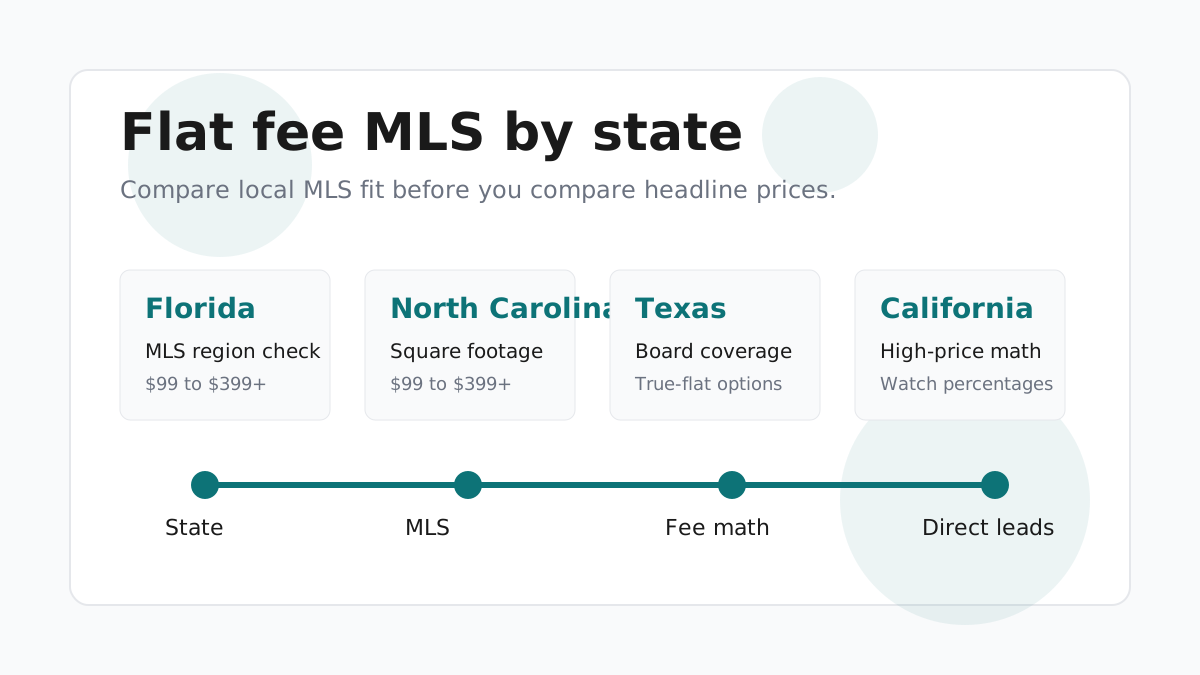
Best flat fee MLS services by state (2026)
A state-by-state flat fee MLS comparison hub for FSBO sellers who want the cheapest clean listing path without closing-fee surprises.

Best flat fee MLS services in Arizona (2026)
A side-by-side comparison of Arizona flat fee MLS companies, with real pricing, local MLS questions, and the fine print sellers miss.
Free FSBO purchase agreement template for Pennsylvania
Pennsylvania FSBO sellers can use a free purchase agreement template, but it needs the right zoning, disclosure, and transfer-tax terms before anyone signs.