Free FSBO purchase agreement template for Pennsylvania
Pennsylvania does not give FSBO sellers one free state-issued purchase contract the way Texas does. The contract most agent-handled deals use is the Pennsylvania Association of Realtors Standard Agreement of Sale, and the public download is locked behind membership. That means most FSBO sellers either start with a Pennsylvania-specific free template or have a real estate attorney draft or review the deal before anyone signs.
The bigger trap is not finding a blank form. It is using the wrong one. Pennsylvania requires a signed Seller’s Property Disclosure Statement before the buyer and seller sign the agreement, the contract needs accurate zoning and violation language, and the transfer-tax math changes fast once local tax gets layered on top of the state’s 1%.
New to FSBO? Start with the main FSBO guide. This post assumes you’re at the contract stage and want the Pennsylvania paperwork right the first time.
Here’s which form to use, what the contract has to say, which Pennsylvania disclosures belong with it, and the mistakes that cost sellers money.
Which purchase agreement Pennsylvania sellers should use
Pennsylvania does not force FSBO sellers to use one official state form. But there is a standard form ecosystem in the state, and ignoring it creates work you do not need.
The standard Pennsylvania Agreement of Sale
The form most agents use is PAR’s Standard Agreement of Sale. PAR says it includes the commonly used clauses and legal requirements for residential sales involving licensees. If the buyer has an agent, this is the form you will probably see.
The catch is access. PAR’s own site says the download requires membership. So for a FSBO seller, this usually works one of three ways: the buyer’s agent sends it over, your attorney has a version they work from, or you use a Pennsylvania-specific free template as the first draft and let your attorney tighten it up.
A free Pennsylvania-specific template
A free Pennsylvania residential purchase agreement template from eForms is a workable starting shell. It gives you the core structure: parties, property, price, earnest money, contingencies, and closing terms.
That is all it is, though. A shell. It does not magically know your zoning status, local transfer-tax custom, open code issues, or the exact disclosure packet your property needs. Use it to organize the deal, not to replace legal review.
Attorney-drafted contract or attorney-reviewed buyer form
The Pennsylvania Attorney General’s consumer guide says sellers have the right to have an attorney review the sales agreement before signing. Use that right.
In my experience, this is the clean FSBO move in Pennsylvania: get the business terms settled, then let a real estate attorney check the agreement before it becomes binding. That costs a lot less than cleaning up a bad contract after the inspection, financing fight, or closing disclosure has already blown up.
What the contract has to cover
A Pennsylvania purchase agreement does not need to be fancy. It needs to be complete. If a term matters, put it in the agreement or a signed addendum. Do not leave important deal points floating around in text messages and assume settlement will sort them out.
Parties, property, and legal description
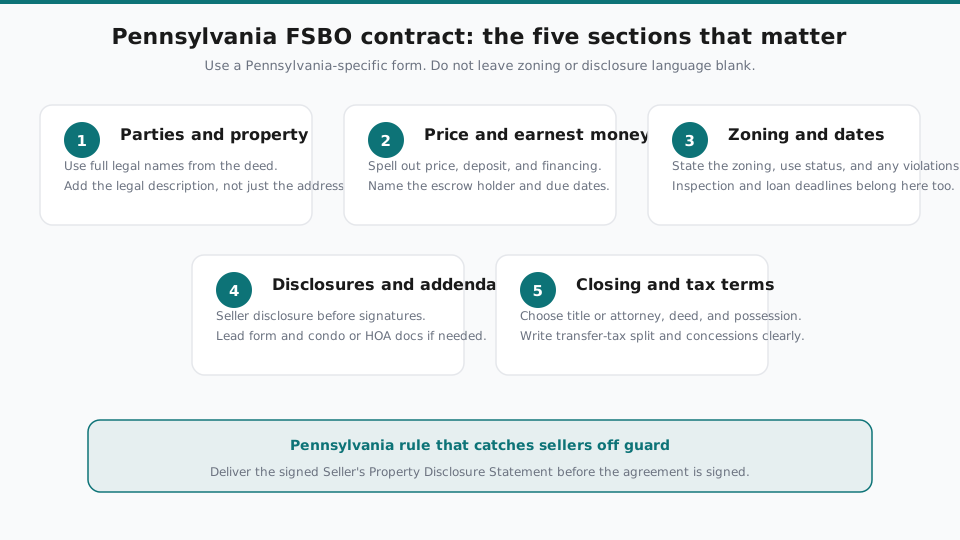
Use the full legal names of every buyer and seller. Then use the real legal description from your deed or county records, not just the mailing address. Title will check this anyway, so do not guess.
Zoning and code-violation language
This is one of Pennsylvania’s sneaky contract traps. The state’s Property Sale Regulation Law requires zoning and violation language in agreements of sale, and the Attorney General warns buyers and sellers to check the zoning clause before signing.
Make sure the agreement states the property’s zoning classification, whether the present use complies with zoning, and whether there is any notice of an uncorrected housing, building, safety, or fire violation. If you leave that blank or get cute with it, you are handing the other side a problem they can use against you later.
Price, earnest money, and contingencies
Spell out the purchase price, financing type, earnest money amount, who holds the deposit, and when it has to be delivered. In a FSBO deal, the safest earnest-money holder is usually the title company or the attorney’s escrow account, not your personal bank account.
Then get specific on deadlines. Inspection. Mortgage approval. Appraisal. Closing date. If the buyer is asking for credits, appliances, a home-warranty payment, or a seller concession toward a buyer’s agent fee, write the exact dollar amount or percentage. Post-NAR, vague language here is how sellers give away more of their equity than they intended. If you need the bigger picture on that issue, read do sellers have to pay the buyer’s agent? and working with buyer’s agents as a FSBO seller.
Closing, title, and possession
Name the settlement company or attorney, the type of deed, the possession date, and who is paying which closing costs. Pennsylvania can close through a title company, an attorney, or a shop that does both. What matters is lining them up early so they can open title, prepare the deed package, and flag any defects before you are a week from closing.
The Pennsylvania forms that should ride with the contract
The purchase agreement is not the whole packet. Not even close.
Seller’s Property Disclosure Statement
Pennsylvania’s Real Estate Seller Disclosure Law is clear: a signed and dated property disclosure statement has to be delivered to the buyer before the seller and buyer sign the agreement of transfer.
The official Pennsylvania disclosure form says sellers must disclose all known material defects that are not readily observable. It is not a warranty. It is not a substitute for the buyer’s inspection. But it is still a legal document, and the law says you cannot make statements you know are false, deceptive, or misleading, or fail to disclose a known material defect.
The form is detailed. Roof leaks, basement seepage, structural repairs, termites, plumbing, sewer, water supply, electrical issues, environmental hazards, boundary disputes, HOA obligations, and permits all show up. If you do not know something, Pennsylvania lets you disclose based on the best information available. If the condition changes before final settlement, the law says you have to notify the buyer that the disclosure is no longer accurate.
For the broader breakdown, read what is a seller’s disclosure and what should you include?.
Lead-based paint disclosure
If the house was built before 1978, federal law kicks in. The EPA says sellers must provide the lead disclosure form, any known reports, the EPA pamphlet, and a 10-day opportunity for the buyer to inspect for lead unless that period is waived in writing.
This is not optional because you are selling FSBO. It belongs in the packet from day one.
Condo, HOA, and property-specific documents
If you are selling a condo or cooperative, Pennsylvania’s disclosure law limits the seller’s duty mainly to the seller’s own unit, while separate condo or co-op resale documents handle the common elements. If you are in an HOA, planned community, or condo, get that resale packet moving early. Buyers hate last-minute surprises about fees, rules, and assessments, and they use them to renegotiate.
Pennsylvania closing items sellers forget about
The agreement gets the attention. The settlement statement is where sellers get blindsided.
Realty transfer tax
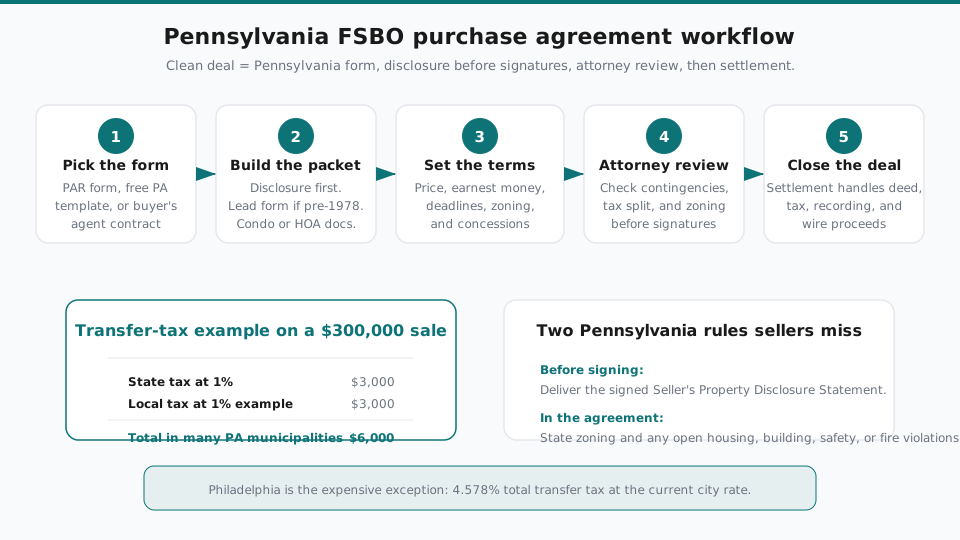
Pennsylvania’s Department of Revenue imposes a 1% state realty transfer tax. Local governments often add another transfer tax on top of that. In many municipalities, the combined total is 2%. In Philadelphia, the current total is 4.578%.
Here is what that looks like on a $300,000 sale:
| Tax | Rate | Cost on $300,000 |
|---|---|---|
| Commonwealth realty transfer tax | 1.000% | $3,000 |
| Local realty transfer tax (common example) | 1.000% | $3,000 |
| Total in many municipalities | 2.000% | $6,000 |
| Philadelphia total | 4.578% | $13,734 |
Do not assume the seller automatically pays half or all of it. The state says both grantor and grantee are jointly and severally liable, which means the government can chase either side if the tax is short. The contract decides how you and the buyer split it. A 50/50 split is common. It is not mandatory.
Settlement company or attorney
Pennsylvania is one of those states where people argue about whether you “need” a lawyer because title companies can handle a standard closing. The practical answer is simpler: line up either a good title company, a good real estate attorney, or a shop that does both before the agreement is signed.
The Attorney General’s guide says sellers have the right to have an attorney review the sales agreement, and Pennsylvania lawyers answering consumer questions say the best time to involve one is before you sign. That matches real life. Once the contract is signed, the expensive mistakes are already on paper.
Wire instructions and recording
Your settlement agent will prepare the deed package, collect the transfer tax, handle recording, and push funds after closing. Verify wire instructions by phone before any money moves. Boring advice. Expensive to ignore.
The mistakes that cost Pennsylvania FSBO sellers money
Using a generic national template
A random internet purchase agreement that is not built for Pennsylvania can miss zoning language, open-violation disclosures, or the right seller-disclosure timing. That is how you turn “free template” into expensive cleanup work.
Delivering the disclosure after the contract is signed
Pennsylvania law says the signed disclosure statement goes out before the agreement is signed. If you treat it like an afterthought, you start the deal with a compliance problem and give the buyer a reason to question everything else in your packet.
Leaving zoning and open violations fuzzy
If the property has a nonconforming use, an old permit issue, or an uncorrected building notice, do not mumble through it. Get the language right in the agreement. This is one of those details that feels boring until it delays settlement or kills financing.
Guessing at the transfer-tax split
The state 1% is only the floor. Local tax gets added on top. Philadelphia is much higher. If you price your net sheet like transfer tax is a flat 1%, you can be off by thousands of dollars before title even starts its final numbers.
Signing before attorney review
Pennsylvania does not give FSBO sellers some magical free do-over just because the form looked simple. Once the agreement is signed, the deadlines are live, the buyer’s expectations are set, and the fix gets more expensive. Have your attorney look at it first.
The clean way to handle a Pennsylvania FSBO contract
Use a Pennsylvania-specific form. Pull your deed. Confirm the zoning classification with the local municipality if there is any chance the use is nonstandard. Finish the Seller’s Property Disclosure Statement before you accept signatures. If the house is pre-1978, add the lead paperwork. Then send the whole packet to your attorney and settlement company for review.
That is the whole play. Not glamorous. Very effective.
Your next move: open a Pennsylvania-specific purchase agreement today, pull your deed, confirm the zoning clause, and complete the disclosure form before you negotiate the final signatures. Then keep moving with the FSBO closing checklist, skip the agent, hire an attorney, and how to find and hire a real estate attorney.
Keep reading

How to find and hire a real estate attorney for your home sale
A step-by-step guide to finding, vetting, and hiring a real estate attorney for your FSBO sale -- where to search, what to ask, and red flags to watch for.
How to advertise buyer agent compensation off the MLS
The NAR settlement banned compensation offers on the MLS, but you can still advertise what you're willing to pay buyer's agents through six other channels. Here's how.
Best flat fee MLS services in North Carolina (2026)
A refreshed side-by-side comparison of North Carolina flat fee MLS companies, with real pricing, local MLS warnings, and the closing-fee math most sellers miss.