How to Post Your Home on Zillow Without an Agent
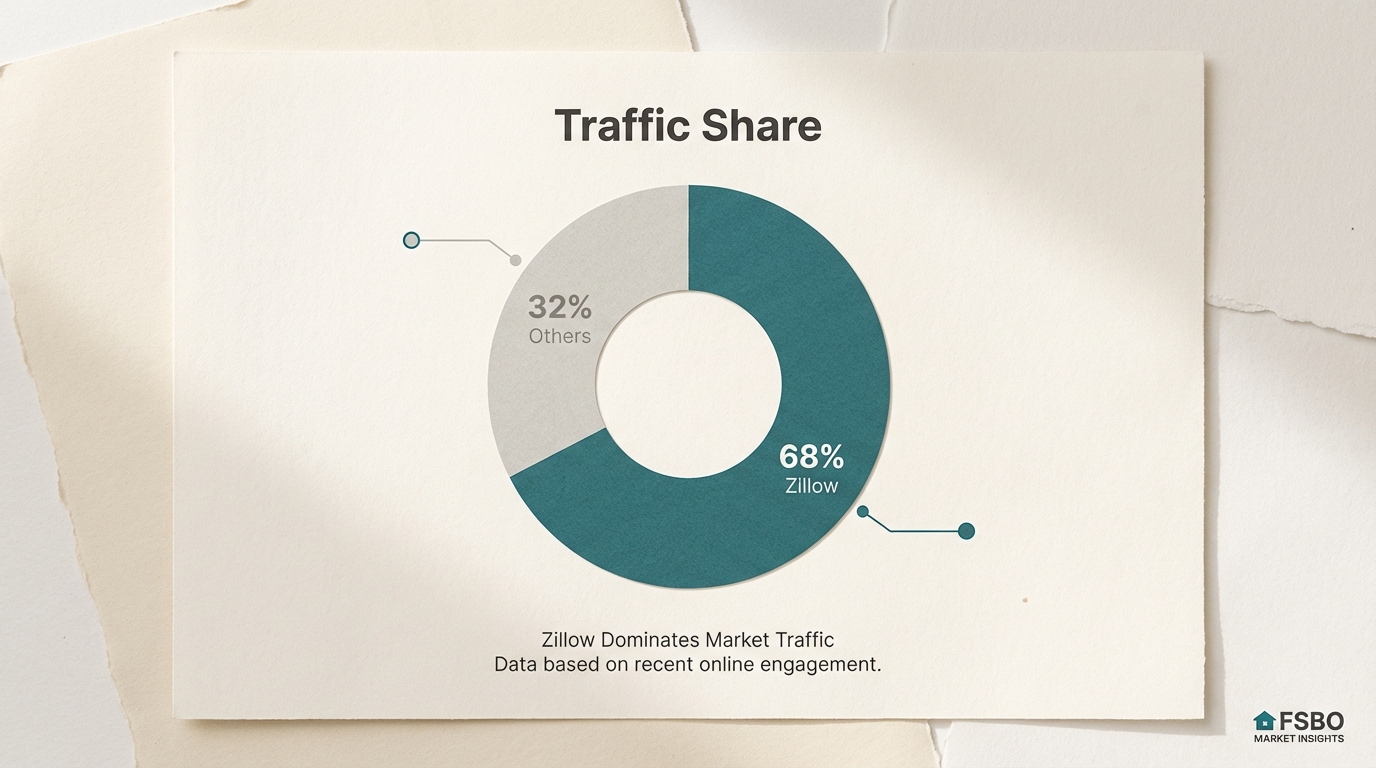
Zillow gets over 230 million monthly visits. Realtor.com, its closest competitor, pulls roughly half that according to Semrush data. When a buyer starts looking for a house, there’s a very good chance they’re starting on Zillow.
So if you’re selling FSBO, Zillow is where your listing needs to be. The good news is you don’t need an agent to get it there. The less-good news is that the exact process depends on where you live.
Here’s exactly how to do it.
Step 1: Check if Zillow lets you post FSBO in your area
Go to zillow.com, click “Sell,” and look for the option to list your home as a For Sale By Owner. In some markets, Zillow allows direct FSBO posting for free. You fill out your details, upload your photos, and you’re live.
But Zillow’s FSBO posting tool isn’t available everywhere. If you don’t see the option, or if it tells you your area isn’t supported, don’t panic. There’s a workaround, and it’s cheap.
Step 2: If Zillow won’t let you post directly, use a flat fee MLS service
A flat fee MLS listing service puts your home on your local Multiple Listing Service, the same database agents use. Once your listing is on the MLS, it automatically syndicates to Zillow, Realtor.com, Redfin, Trulia, and dozens of other sites.
These services typically cost between $100 and $500. That’s it. One-time fee. Compare that to the $12,000-$18,000 you’d hand over in listing agent commission on a $400,000 house.
Not all flat fee services are equal, though. Before you hand over your credit card, ask these four questions:
- Are there cancellation fees? Some services lock you into a contract. If you change your mind or sell before listing, they’ll charge you. Look for services with no cancellation penalty.
- Can you edit the listing before it goes live? You want to review everything, especially your photos and description, before it hits the MLS. Some services publish immediately without letting you proof it first. That’s a problem.
- Will buyer leads come directly to you? This is the big one. Some flat fee services route buyer inquiries through their own agents, who then try to upsell you on full-service representation. Make sure your phone number and email go straight on the listing.
- Are there hidden fees? Some companies advertise a low base price but tack on charges for things like additional photos, listing changes, or open house scheduling. Get the full cost in writing before you sign up.
A good flat fee MLS service is one of the best deals in real estate. A bad one will waste your time and your money. Spend 20 minutes reading reviews before you commit.
Step 3: Hire a real estate photographer
This is not optional. I don’t care how good your iPhone camera is.
A professional real estate photographer will cost you between $150 and $250. They bring wide-angle lenses, proper lighting equipment, and they know how to make a 1,200-square-foot living room look like a 1,200-square-foot living room instead of a closet.
Listings with professional photos get more clicks, more showings, and sell faster. Every dollar you spend here comes back to you multiple times over. Think about it this way. You’re already saving $15,000 or more by not hiring a listing agent. Spending $200 on photos that actually make your home look good is a rounding error.
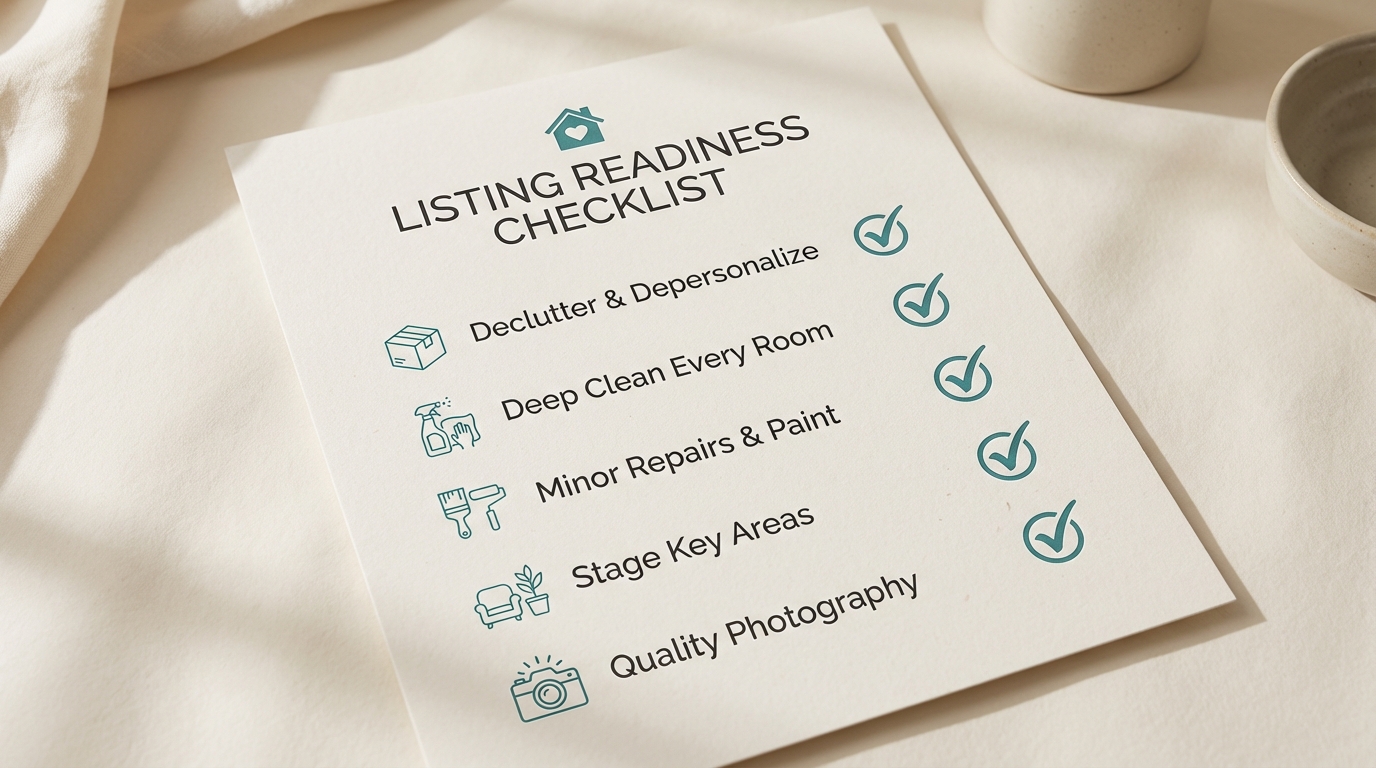
Before the photographer arrives, do the work: declutter every room, clean the counters, make the beds, open the blinds. Move your car out of the driveway. Hide the trash cans. These details matter more than you think.
Step 4: Write a listing description that does its job
Your listing description doesn’t need to be a novel. It needs to do three things: tell buyers what makes the home worth seeing, give them the key facts they’re looking for, and make them want to schedule a showing.
Lead with your strongest feature. If you’ve got a brand-new kitchen, that’s sentence one. If you’re on a half-acre lot in a neighborhood where most lots are a quarter acre, lead with that. Don’t bury the good stuff under generic filler about “nestled in a desirable community.”
Include the basics: number of bedrooms and bathrooms, square footage, lot size, year built, recent upgrades, school district. Buyers are scanning dozens of listings. Give them the information fast.
And here’s a tip that a lot of FSBO sellers miss: add the phrase “Buyer’s Agents Welcome” somewhere in your description. About 86% of buyers work with an agent. If those agents think you’re going to be difficult to work with or won’t pay a buyer’s agent commission, they’ll steer their clients to other listings. That one line signals that you’re a professional seller and that their commission is covered.
Step 5: Pick your listing day
Friday. List on a Friday.
The logic is straightforward. Buyers browse listings during the week, but they schedule showings for the weekend. If your listing goes live on a Friday, it hits the market while it’s still fresh and new, right when buyers are making their weekend plans. You get maximum eyeballs at the exact moment people are deciding which homes to visit on Saturday and Sunday.
List on a Monday and your listing is five days old by the time the weekend rolls around. It’s already buried under newer listings. You get fewer first-weekend showings, and fewer showings means a longer time on market.
Have everything ready (photos, description, pricing) so you can publish on a Friday morning and be ready for calls by Friday afternoon.
Step 6: Fill out your listing and go live
Whether you’re posting directly on Zillow or going through a flat fee MLS service, the actual form is pretty standard. You’ll enter:
- Your address and property type
- Price (you should have your CMA done before you get to this step. If you don’t, go do that first)
- Bedrooms, bathrooms, square footage, lot size
- Year built
- Key features and upgrades
- Your listing description
- Your contact info
- Your photos (upload the professional ones, obviously)
Double-check everything before you publish. Typos in the square footage or bedroom count will cost you showings. A wrong phone number will cost you offers.
Once you hit publish, your listing goes live to hundreds of thousands of buyers who are actively looking for a home like yours. That’s the same exposure an agent would have gotten you, minus the $15,000-$24,000 check you’d have written them at closing.
Step 7: Respond fast and be ready
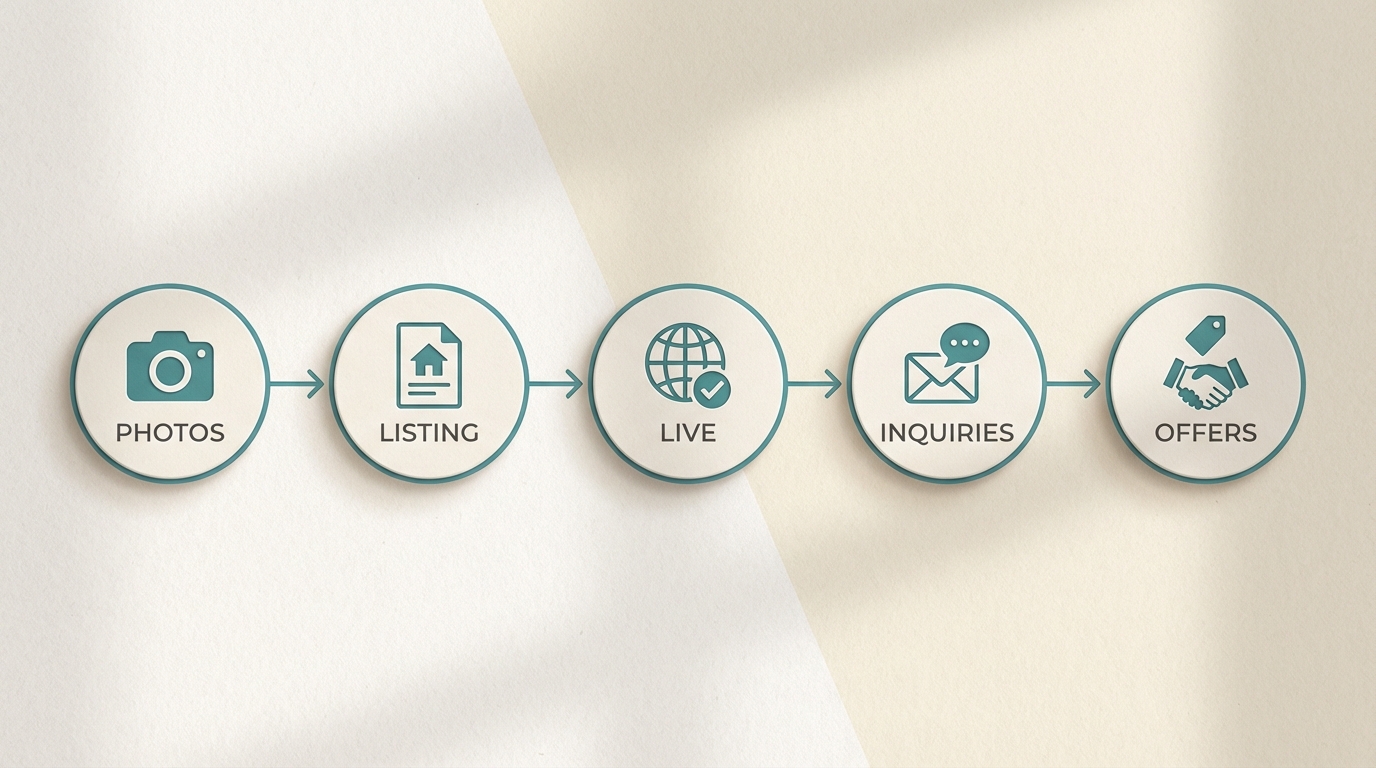
Your listing is live. Now the work starts. When inquiries come in, respond within the hour. Buyers and their agents are reaching out to multiple sellers at the same time. The seller who responds first gets the showing.
Set up showing times that work for you, keep your house clean, and be available. The first two weeks of a listing are the highest-traffic period. Don’t waste them.
Your home is now in front of every buyer searching Zillow in your area, and you kept your equity where it belongs. Next step: make sure your listing attracts serious buyers, including that all-important “Buyer’s Agents Welcome” line. Then get ready to handle offers and negotiate when they come in — that’s where the real money gets made or lost. And if you haven’t set your price yet, the CMA guide walks you through the same process agents use, for free.
Keep reading
Free FSBO purchase agreement template for New York
New York FSBO sellers need an attorney to draft their purchase contract -- here's what the standard bar association form covers, what the 2024 PCDS changes mean for you, and how to close without an agent.
What is a buyer representation agreement (and why sellers should care)
Since August 2024, every buyer's agent must have a signed compensation agreement before showing homes. Here's what that agreement says, what it means for FSBO sellers, and how to handle it.
What Happens During a Home Inspection (A Seller's Perspective)
Home inspections are predictable if you know what's coming. Here's exactly what inspectors look for, how long it takes, and how to prepare as a FSBO seller.