Free FSBO purchase agreement template for Texas
Texas FSBO sellers don’t need to draft a purchase agreement from scratch. The Texas Real Estate Commission (TREC) publishes a free, standardized contract called the One to Four Family Residential Contract (Resale), and anyone can download and use it. Agents are required to use it. You’re not required to, but you should — it’s the same form every title company and real estate attorney in the state expects to see.
Here’s where to get it, how to fill it out, and the sections where FSBO sellers make the most expensive mistakes.
Where to download the TREC contract
Go directly to the TREC website at trec.texas.gov and search for “One to Four Family Residential Contract (Resale).” The current version is form 20-17. It’s a free PDF. Don’t pay a third-party site for what TREC gives away.
TREC updates these forms periodically. The most recent round of changes took effect January 2025, with another set of updates coming in 2026. Always download the latest version before you start filling anything out. Using an outdated form can create problems at closing.
Do FSBO sellers have to use the TREC form?
No. Texas law only requires licensed agents and brokers to use TREC’s promulgated forms. As an unlicensed seller, you can technically use any contract you want.
But here’s the reality: the TREC form is what every title company, lender, and real estate attorney in Texas is built to process. Walk into a title company with a contract you pulled from a random legal website and you’ll spend hours explaining what each clause means. Walk in with the TREC form and they barely need to glance at it.
Use the TREC form. It’s free, it’s thorough, and it keeps the transaction moving.
The key sections and what they mean
The TREC One to Four Family Residential Contract runs about 11 pages. That sounds intimidating, but most of it is standardized language you don’t change. Here are the sections you actually fill in and the ones where mistakes cost money.
Paragraph 1: parties
Your legal name as the seller and the buyer’s legal name. Seems simple, but the names here have to match the names on the deed and the title. If you’ve changed your name since buying the property, flag it early with your real estate attorney.
Paragraph 2: property
The legal description of the property, not just the street address. Your deed or tax records have this. It reads something like “Lot 12, Block 3, Sunrise Estates, Phase II, City of Austin, Travis County, Texas.” Get it right. The title company will catch errors, but that creates delays.
Paragraph 3: sales price
The total price broken into components: financing amount, seller financing (if any), and cash balance. If the buyer is getting a mortgage for $320,000 and putting $80,000 down on a $400,000 house, those numbers go here. Double-check the math. I’ve seen contracts where the financing amount plus the cash balance didn’t equal the sales price. That’s an immediate problem.
Paragraph 4: earnest money and option fee
This is where Texas contracts differ from most other states, and where first-time FSBO sellers get confused.
Earnest money is the buyer’s good-faith deposit. It goes to the title company, not to you. Typical amounts run 1% to 2% of the purchase price. On a $400,000 house, that’s $4,000 to $8,000. This money is applied to the buyer’s closing costs if the deal closes. If the buyer backs out without a valid reason under the contract, you may be entitled to keep it.
Option fee is a Texas-specific thing. The buyer pays you a small fee, usually $100 to $500, in exchange for the right to walk away from the contract for any reason during the option period. That period is negotiable, but 7 to 10 days is standard. During those days, the buyer gets inspections done, evaluates the property, and decides whether to move forward. If they back out during the option period, they lose the option fee but get their earnest money back.
The option fee goes directly to you, not the title company. This changed in recent TREC updates, so make sure you understand the current delivery requirements. The buyer must deliver the option fee within 3 days of the effective date (the day the last party signs).
This is one of the most misunderstood sections of the Texas contract. Get your attorney to walk you through it.
Paragraph 5: earnest money delivery
Earnest money has to be delivered to the title company within 3 days of the effective date of the contract. Weekends and legal holidays don’t count toward those 3 days. If the buyer doesn’t deliver on time and you want to enforce it, you need to give written notice. Most title companies track this, but don’t assume they’ll catch every deadline.
Paragraph 6: title and survey
This covers the title commitment, title insurance, and survey. The title company has to deliver the title commitment within 20 days of the contract date, with an automatic extension. As the seller, you’re responsible for delivering an existing survey and signing a T-47 Affidavit confirming whether you’ve made changes to the property since the survey was done.
If you don’t have an existing survey, the contract specifies who pays for a new one. Surveys in Texas typically run $300 to $800 depending on lot size. This is negotiable between you and the buyer.
The title commitment is the title company’s report on the status of the property title. It lists any liens, easements, or encumbrances. Review it with your attorney. If there are title defects, you need to cure them before closing or the deal falls apart.
Paragraph 7: property condition
This paragraph ties to your seller’s disclosure. You’re disclosing the condition of the property and any known defects. Texas law requires most sellers to complete the Seller’s Disclosure Notice (a separate TREC form). If your home was built before 1978, the federal lead-based paint disclosure applies too.
The 2025 TREC update added a new provision about mold remediation certificates. If you’ve had professional mold remediation done in the last five years, you now need to provide the certificates to the buyer. This wasn’t required before January 2025.
Paragraph 9: closing
The closing date, the title company handling the transaction, and how the proceeds will be delivered. Wire transfer is standard. A piece of advice: call the title company directly to verify wire instructions. Wire fraud in real estate closings is a real and growing problem. Never trust wire instructions sent via email without a phone call to confirm them.
Paragraph 11: special provisions
This is the blank section where you add anything not covered by the standard contract or its addenda. Your attorney earns their fee here. Common special provisions include repair agreements, personal property included in the sale, or unique terms you’ve negotiated with the buyer.
A word of caution: agents are actually restricted from putting certain things in the special provisions (TREC limits what agents can draft here). As an unlicensed seller, you’re not restricted in the same way, but that also means you can write something that creates legal problems if you’re not careful. Don’t wing this section. Let your attorney draft it.
The addenda you’ll probably need
The TREC contract has checkboxes for common addenda that get attached to the main contract. Most residential transactions use at least a few of these:
Third Party Financing Addendum. If the buyer is getting a mortgage, this addendum is required. It spells out the type of loan, the amount, and the timeline for loan approval. This is where the buyer’s financing contingency lives. If they can’t get approved by the deadline, they can terminate and get their earnest money back.
Seller’s Disclosure of Property Condition. TREC has a standardized version. Use it. We’ve covered this in detail in our seller’s disclosure breakdown.
Addendum for Property Subject to Mandatory Membership in a Property Owners Association. If you’re in an HOA, this addendum is required. It covers the disclosure of HOA documents, transfer fees, and the buyer’s right to review HOA financials and rules.
Non-Realty Items Addendum. If you’re including appliances, furniture, or other personal property in the sale, list everything here. “Refrigerator stays” written on a napkin won’t hold up. Put it in the addendum.
The five mistakes that cost Texas FSBO sellers money
After going through this process myself and talking with attorneys who handle FSBO transactions regularly, these are the mistakes that come up again and again.
Missing the option period deadlines. The option period is short, usually 7 to 10 days. If the buyer asks for repairs or credits during the option period, you have limited time to respond. If neither side does anything and the option period expires, the buyer loses their right to terminate without risking their earnest money. Track these dates yourself. Don’t rely on anyone else to remind you.
Leaving the special provisions blank when they shouldn’t be. If you’ve negotiated anything verbally with the buyer that isn’t covered by the standard contract, it needs to be in writing in the special provisions or an addendum. “We agreed the seller would fix the fence” means nothing if it’s not in the contract.
Wrong names or legal descriptions. The names on the contract have to match the title. The legal description has to match the deed. Mismatches create title issues that delay or kill closings.
Skipping the financing addendum. If the buyer is getting a loan and you don’t attach the Third Party Financing Addendum, you have no contractual protection if their financing falls through. You want that contingency in writing with a specific deadline.
Using an old version of the form. TREC updates its forms regularly. The January 2025 changes added new mold disclosure requirements and updated the financing addendum. If you download an old version, you’re missing provisions that the title company expects to see.
Your attorney makes this manageable
The TREC contract is well-designed, but it’s still a legal document governing a transaction worth hundreds of thousands of dollars. Reading through the form is one thing. Knowing which boxes to check, what numbers to fill in, and what to put in the special provisions is another.
A Texas real estate attorney will charge you $400 to $700 to review and help you fill out the contract. Some charge a flat fee to handle the entire closing. Either way, it’s a fraction of what you’d pay an agent. And unlike an agent, your attorney has a legal obligation to represent your interests and only your interests.
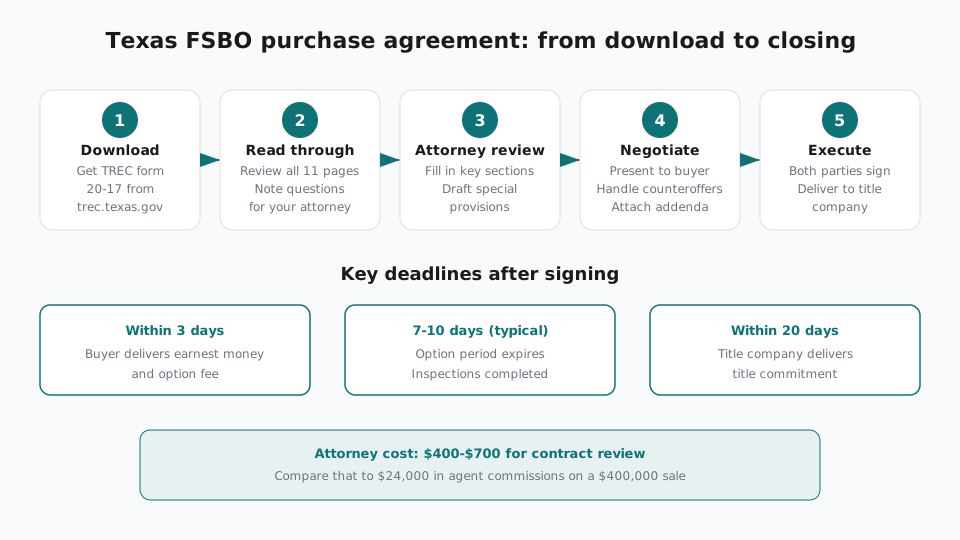
Download the TREC form from trec.texas.gov. Read through it once so you know what you’re looking at. Then hand it to your attorney and let them fill in the parts that matter. For the full document checklist you’ll need at closing, here’s the complete FSBO closing checklist.
Keep reading
FSBO closing checklist: every document you need
The complete list of documents sellers need to gather, review, and sign at closing -- organized by who prepares what and when you need it.
Florida FSBO disclosure requirements: what you must tell the buyer
Florida FSBO sellers must disclose known material defects plus flood, HOA, property-tax, sewer, radon, and lead-paint notices.
How to sell an inherited house FSBO: probate and tax guide
What to do before listing an inherited house yourself, from probate authority and stepped-up basis to sibling buyouts and closing paperwork.